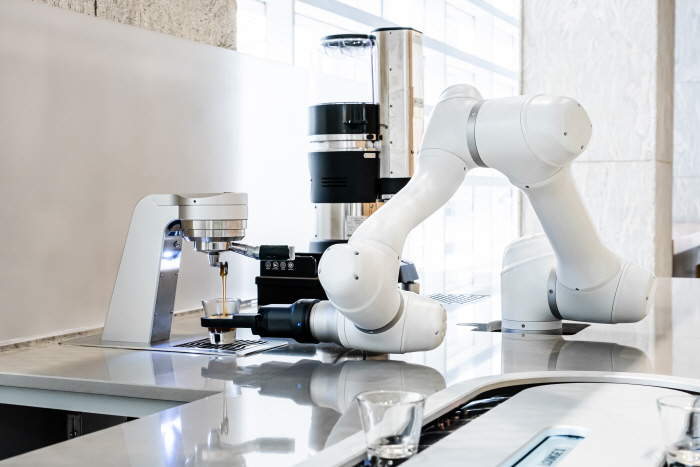
Robots are frying chicken, brewing coffee, packaging orders, and delivering to tables. Their role in the Food & Beverage industry is expanding rapidly — here's where things stand.
1. The F&B Landscape
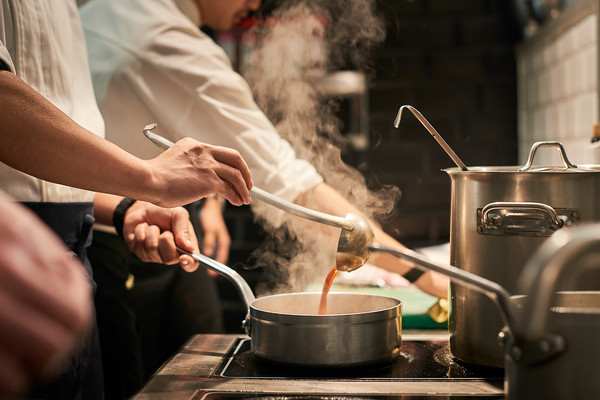
Post-pandemic growth in delivery and takeout has made production efficiency a strategic priority across F&B. At the same time, the sector faces compounding labor challenges: repetitive motion injuries, respiratory illness from cooking fumes, chronic understaffing, and rising labor costs — burdens falling disproportionately on the small operators that dominate the industry.
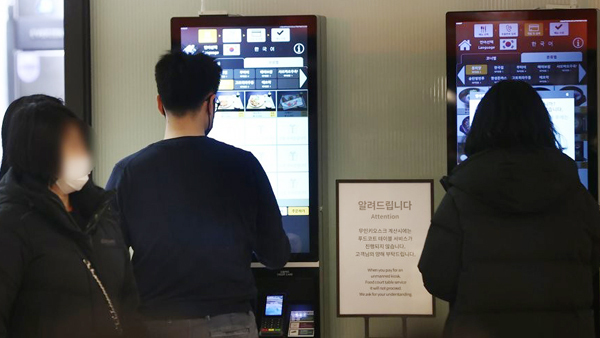
Kiosk self-ordering is now standard. The next frontier is extending robot deployment beyond the front of house into cooking, packaging, and service.
2. Cobot Applications: Cook, Pack, Serve
1) Cooking
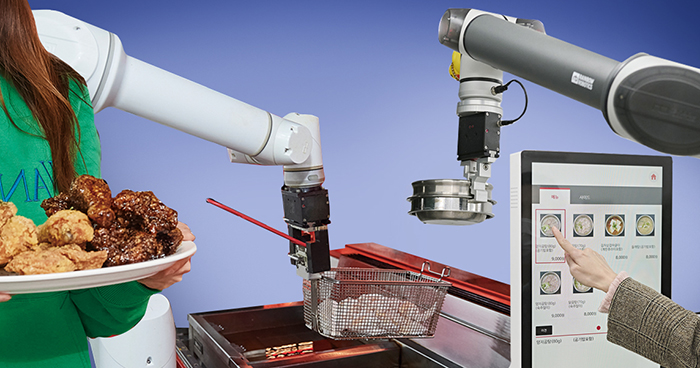
Cooking robots are now commonplace across neighborhood chicken shops, family restaurants, and highway rest stops — frying chicken, boiling noodles, baking pizza, and rolling sushi. Beyond solving labor shortages, robots maintain consistent quality and output regardless of heat and fume conditions.
2) Packaging
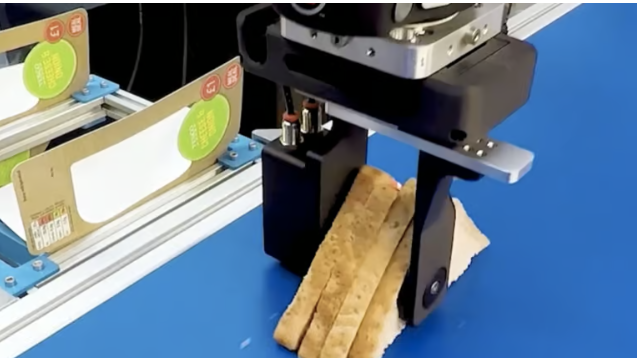
Robots handling combined cooking and packaging tasks execute precise, repeatable processes — including delicate applications such as sandwich assembly, where ingredients must not shift or compress during packaging.
3) Serving
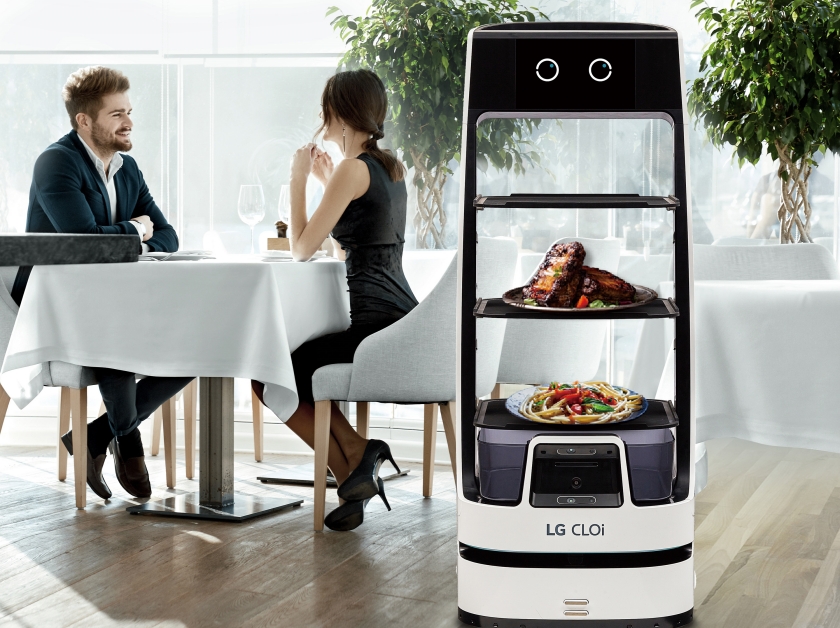
Autonomous navigation-based service robots identify people and obstacles to deliver food tableside. Korea's service robot market grew approximately 364% — from KRW 13.5 billion (2020) to KRW 62.7 billion (2022). However, over half the domestic market is supplied by Chinese manufacturers, leaving a significant local supply gap.
3. Notable Deployments
1) Rowbert Chicken
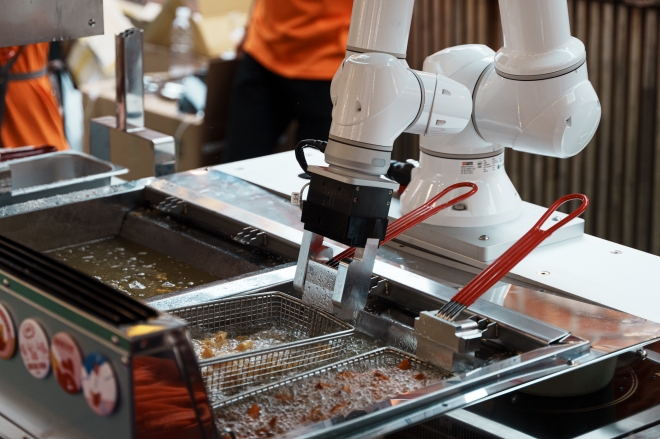
A two-robot system: one handles marinating and breading; the other fries. Staff input the recipe; robots execute mixing and frying autonomously. The result is consistent hygiene and flavor. Chicken is considered a near-ideal F&B category for cobot deployment — labor-intensive, hazardous cooking environment, but relatively simple and standardized process. Major brands including Kyochon, Bareun Chicken, and Mexicana have adopted the system.
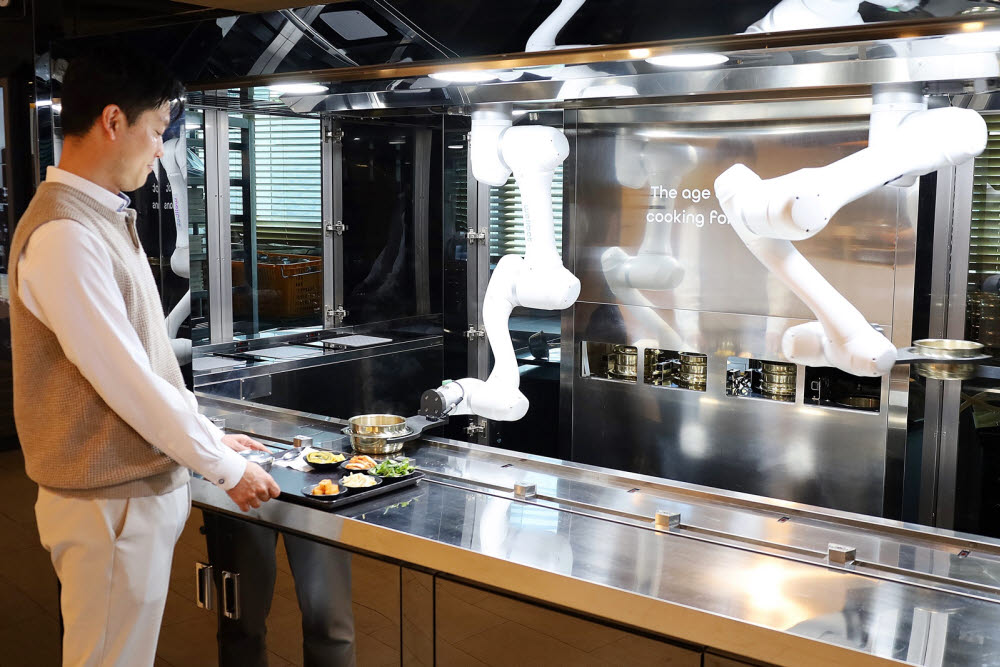
2) Brownbana — Ice Cream Robot
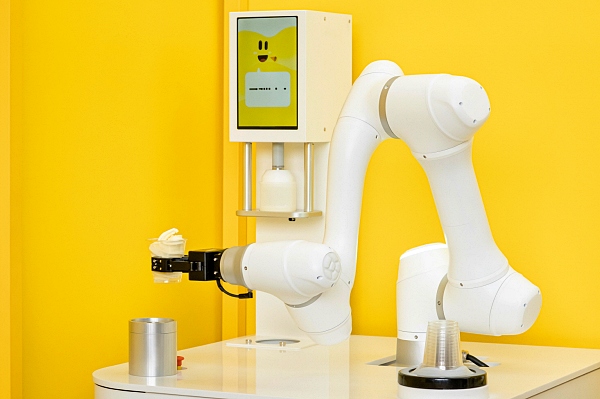
Korea's first F&B cobot to achieve safety certification via Power and Force Limiting (PFL) mode — enabling fence-free, sensor-free operation in a shared human space by demonstrating contact forces below biomechanical threshold limits. The robot prepares and delivers ice cream directly to customers.
3) Sungkok Middle School Cafeteria
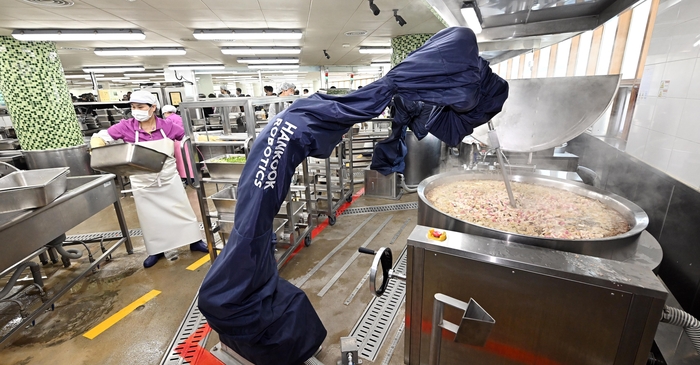
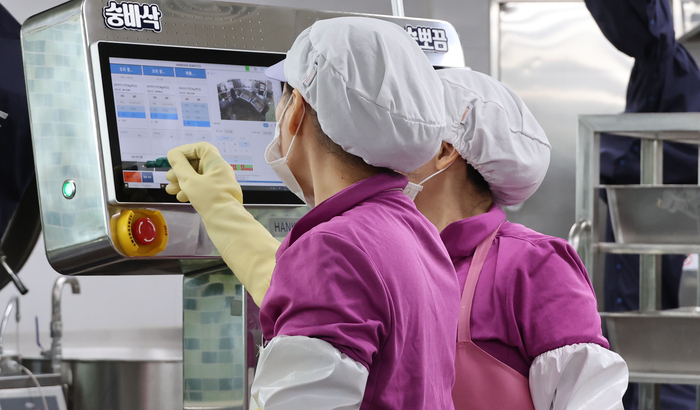
Korea's first school cafeteria cobot deployment, also PFL-certified. Staff prepare and load ingredients; cobots handle continuous stirring of large-batch soups and direct cooking tasks that generate heavy fumes — a practical division of labor that protects worker health while maintaining throughput.
4. Key Considerations for F&B Cobot Adoption
- Food safety & hygiene — materials in contact with food, sterilization protocols, and workspace conditions
- Workspace design — layout enabling smooth human-robot collaboration
- Safety assurance — verified safety for simultaneous human-robot operation
- ROI — productivity gains and labor cost savings relative to capital investment
Speed of adoption is accelerating — but safety must lead. Cobots, as a category of industrial robot, require mandatory safety certification under Korean law. No exceptions.

Safetics helps manufacturers eliminate cost and procedural barriers in collaborative robot safety.