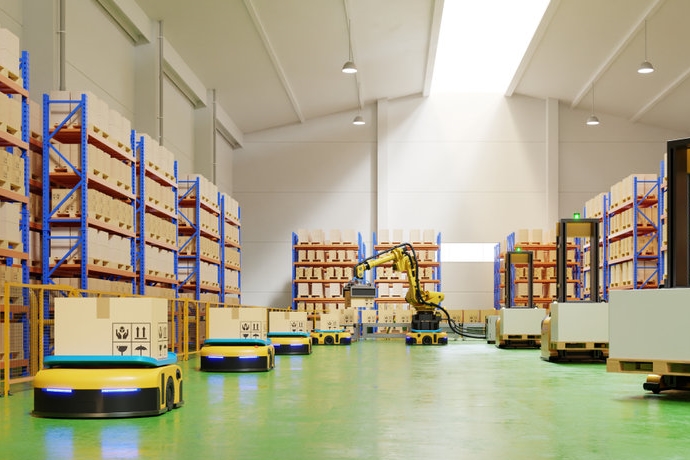
Coupang's return to profitability, Alibaba's aggressive marketing push, Amazon's unrelenting growth — logistics is now fundamental infrastructure for modern life. As online retail platforms scale, the volume of goods requiring handling grows exponentially. Mobile robots are the answer to that demand.
1. Why Mobile Robots in Logistics
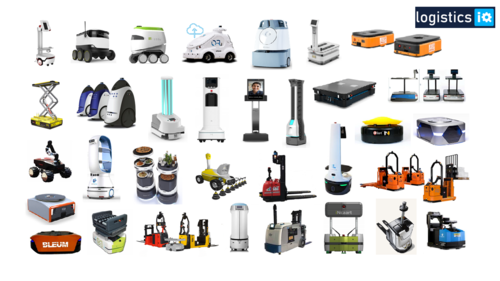
Deploying mobile robots in repetitive, labor-intensive logistics operations delivers six compounding advantages:
Benefit | Detail |
|---|---|
Automation and efficiency | Labor and time savings |
Worker safety | Staff redirected to safer, higher-skill tasks |
Accuracy | Reduced errors in transfer and sorting |
24/7 operation | Unaffected by environment or shift constraints |
Productivity | Consistent speed and throughput |
Cost reduction | Long-term labor cost reduction |
2. Three Types of Mobile Robots
1) AGV (Automated Guided Vehicle)
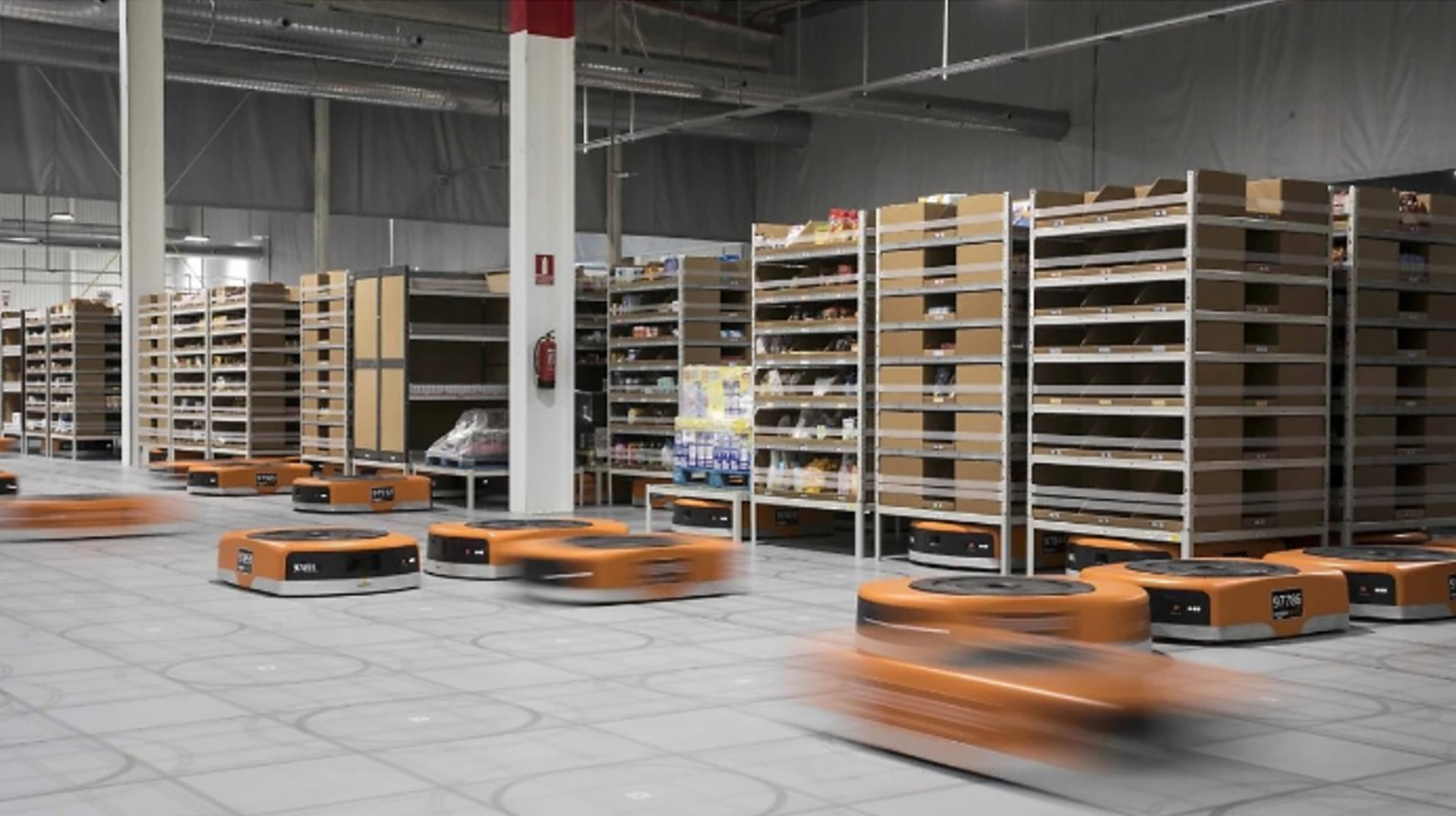
Follows fixed physical guidance infrastructure — magnetic tape, embedded tracks, or QR codes. Reliable on fixed routes; requires reinstallation when layouts change.
2) AMR (Autonomous Mobile Robot)
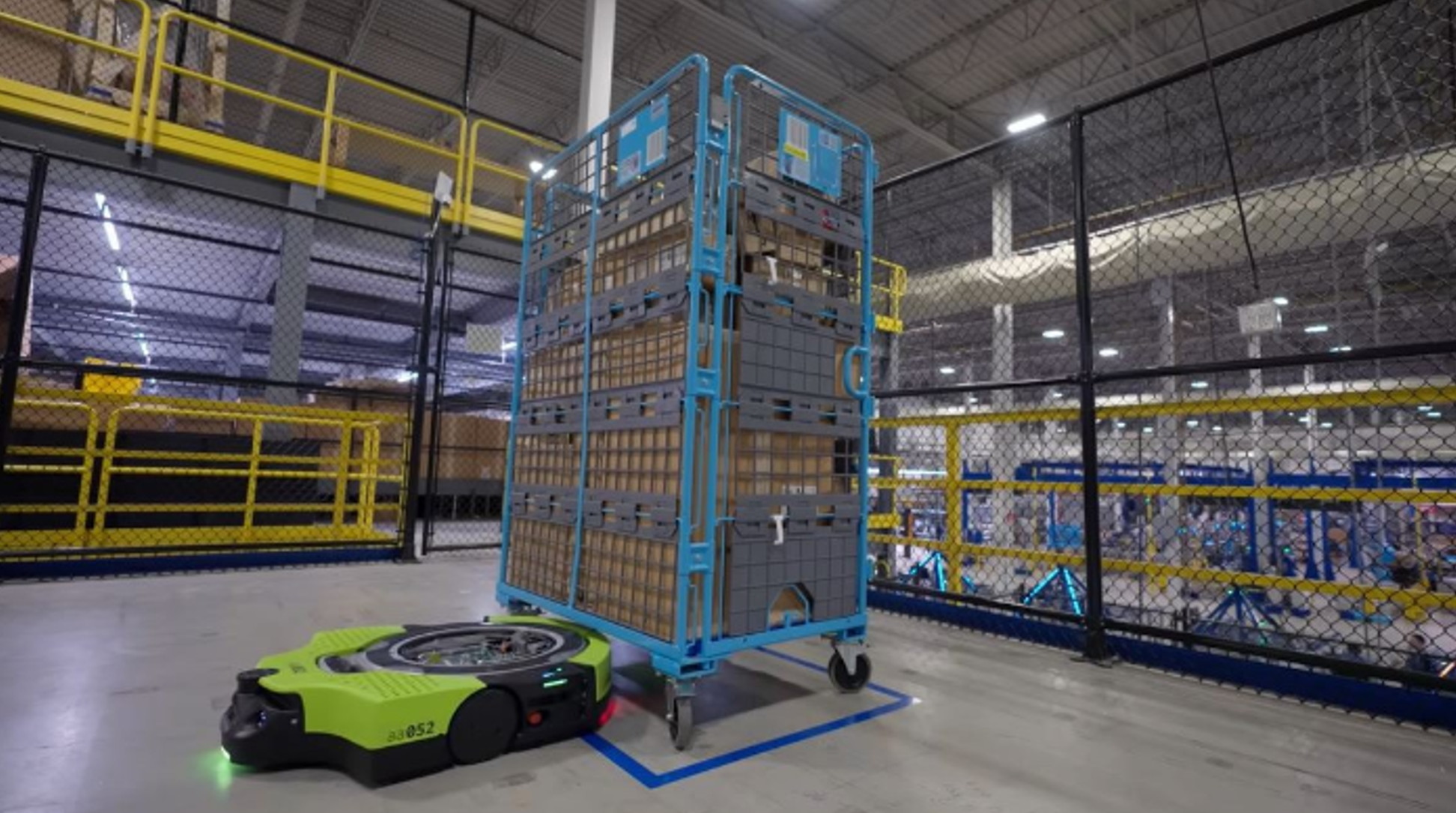
Built-in navigation and mapping enable autonomous path calculation and obstacle avoidance without infrastructure. ABB Robotics unveiled the AMR T702 at LogiMAT 2024, featuring AI-based visual SLAM navigation and AMR Studio software — making first-time deployment and management accessible without specialist expertise. MSI debuted the AMR-AI Delivery Robot Pro at GIC 2024, adding smart facial and voice recognition for AI-driven delivery service.
2) AMMR (Autonomous Mobile Manipulator Robot)
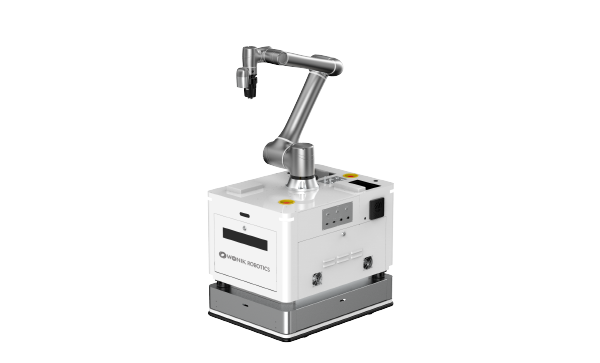
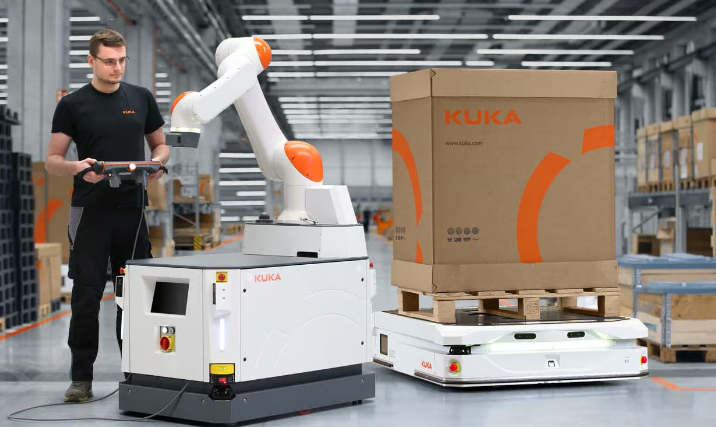
The next evolution: an AMR with a robot arm attached. The AMMR combines platform mobility with manipulator dexterity — effectively a self-driving collaborative robot. Korea's Woonick Robotics and Zeus both unveiled AMMRs at recent exhibitions. KETI (Korea Electronics Technology Institute) has developed technology enabling simultaneous teaching of the mobile platform and manipulator — a significant usability advance that should accelerate AMMR adoption.
3. Market Outlook
1) Interact Analysis (2022)
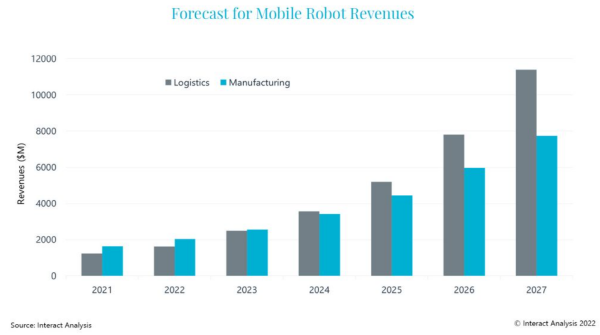
Mobile robot (AGV + AMR) shipments grew 53% in 2022; 4 million+ units projected to be installed by 2027, with 1.5 million units in 2027 alone. Industry revenue forecast: 30–40% CAGR.
2) Logistics IQ (2024)
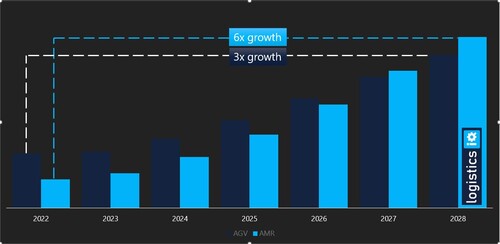
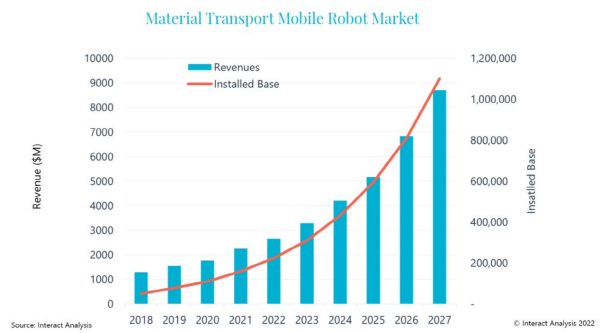
Mobile robot market projected to reach approximately $20B by 2028 — substantially above the 2022 forecast, reflecting faster-than-expected growth.
The upward revision in just two years signals how rapidly the market is moving. Logistics and manufacturing remain the dominant application segments, with delivery and service sectors adding meaningful incremental demand.
4. Essential Conditions for Safe Deployment
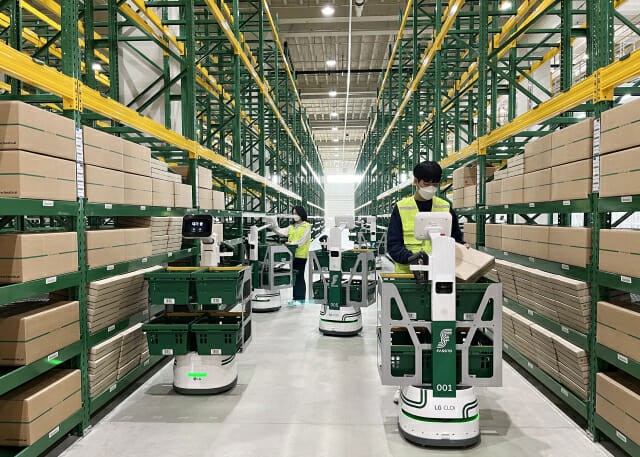
Mobile robots are no longer optional in logistics — they are infrastructure. But technology must be used well. For mobile robots to coexist safely with people:
- Sensor and camera technology must continue advancing
- Autonomous navigation algorithms must be optimized for real-world variability
- Speed and force limits must be enforced
- Emergency stop functions must be robust
- Operator training must be comprehensive and ongoing
Robot capability and safety are not in tension — both must advance together.
For safe and productive robot deployment, contact Safetics.