🤔 Humanoids, Cobots, and AMRs: What's the Difference — and Which One Do You Actually Need?

Three robot categories dominate the conversation right now. Here's the market context before diving into the distinctions.
The global robotics market is projected to grow from $71.2B (2023) to over $200B by 2030 (18.4% CAGR). Within that:
Robot Type | 2024 Market | 2030 Forecast | CAGR |
|---|---|---|---|
Collaborative robot (cobot) | $2.14B | $11.64B | 31.6% |
AMR | $4.07B | $9.56B | 15.1% |
Humanoid robot | $1.55B | $4.04B–$11.0B | 17.5–42.8% |
Cobots and AMRs are scaling rapidly in active deployment; humanoids are in the investment and pilot explosion phase.
💡 One-Line Summaries
- Humanoid robot — Two arms, two legs; designed to do what humans do, in infrastructure built for humans
- Collaborative robot (cobot) — A robot arm working alongside people; excels at repetitive fixed-position tasks
- AMR — A wheeled robot navigating factories and warehouses autonomously; replaces the worker pushing a cart
🤖 Humanoid Robots: Stepping Into Human-Scale Environments
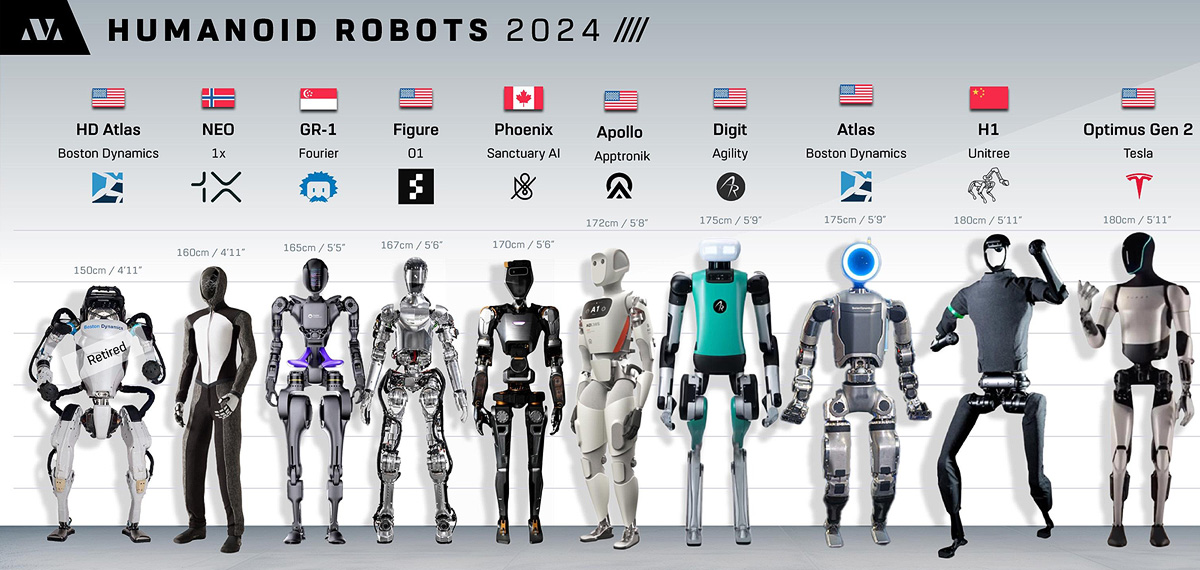
The defining concept: a robot that can climb stairs, open doors, press buttons, and pull items from racks — operating inside infrastructure designed for humans, without requiring that infrastructure to change.
Typical specs: two arms + two legs + torso; height approximately 160–180 cm. Representative platforms: Tesla Optimus, Figure AI Figure 01, Agility Robotics Digit.
Current deployment targets:
- Factories and warehouses: box handling, palletizing/depalletizing, tote transfer between AMRs and conveyors
- Fulfillment centers: box handling, recyclable sorting
- Long-term: retail, hotels, construction, broader service environments
Market outlook: Grand View Research forecasts $1.55B (2024) → $4.04B (2030) at 17.5% CAGR; more aggressive reports cite $11.0B at 42.8% CAGR. Morgan Stanley projects the humanoid-related market could reach $5 trillion by 2050. The consensus: small today, expected to be explosive.
🦾 Collaborative Robots: The Arm at the Station

Where traditional industrial robots operate at high speed behind safety fencing, cobots are designed for human proximity — with constrained force and speed, collision detection, protective stop functions, and simplified programming interfaces.
Primary applications:
- Fastening and assembly
- Pick-and-place, picking and packing
- Palletizing and depalletizing
- Machine loading/unloading, inspection assistance
Why the rapid growth?
Two forces: low-to-mid volume, high-mix production environments that conventional industrial robots can't serve efficiently are shifting to cobots; and cobot prices and engineering complexity have dropped significantly. Grand View Research forecasts $2.14B (2024) → $11.64B (2030) at 31.6% CAGR; MarketsandMarkets takes a more conservative view at 18.9% CAGR. Either way, the direction is 20–30%+ annual growth concentrated in SME manufacturing and logistics.
🛞 AMRs: The Legs of the Facility
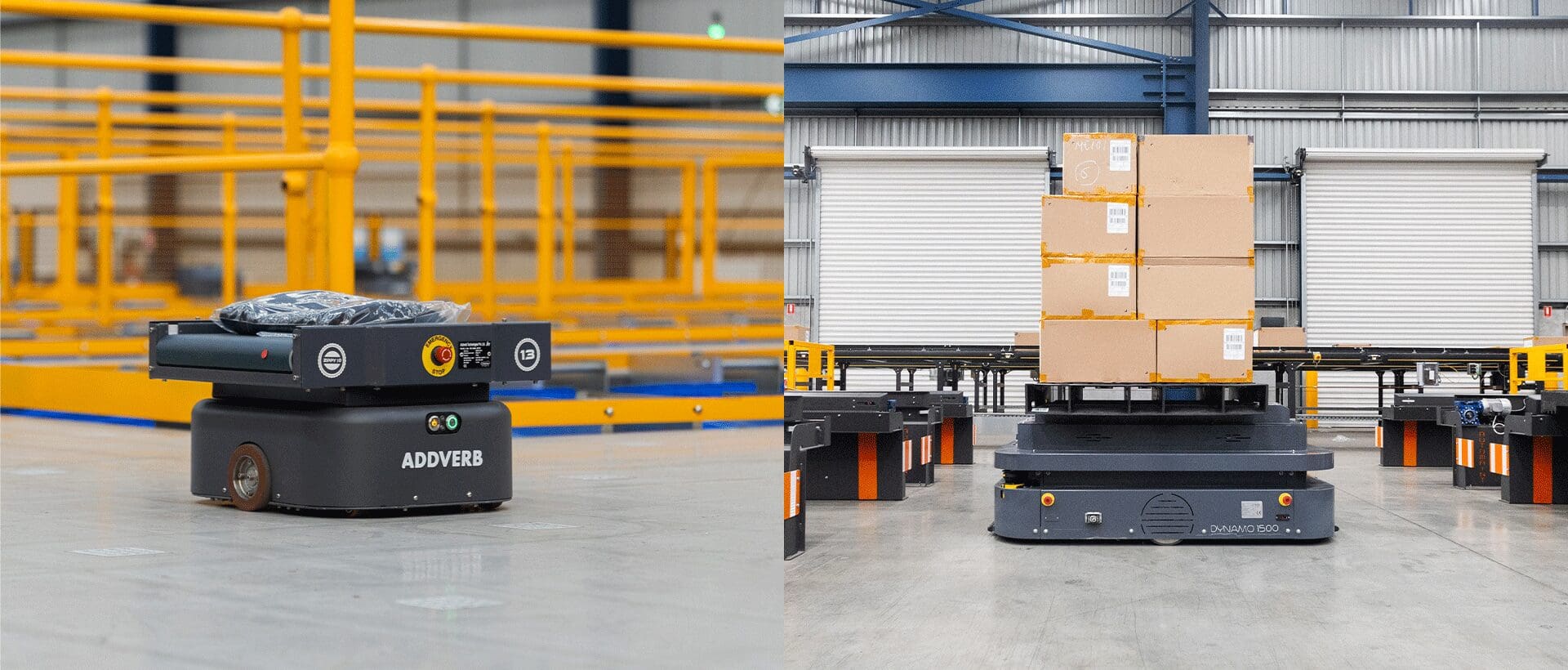
Unlike AGVs — which follow fixed tape or magnet-defined paths — AMRs build maps using SLAM, detect and avoid obstacles in real time, and dynamically reroute. They are already mainstream.
Primary applications:
- Warehouse rack navigation and box transport
- Factory inter-process transport: warehouse → production line, production line → inspection/packaging
- Hospital delivery: medications, specimens, consumables, meals
Market status: Grand View Research forecasts $4.07B (2024) → $9.56B (2030) at 15.1% CAGR; MarketsandMarkets aligns at 15.1% CAGR from a $2.01B base. AMRs are not an emerging technology — they are already deployed at scale across e-commerce, 3PL, and fulfillment center operations.
☑️ Side-by-Side Comparison
Humanoid | Cobot | AMR | |
|---|---|---|---|
Form | Two arms, two legs | Fixed-mount robot arm | Low-profile wheeled platform |
Core role | Replace humans in human-scale environments | Repetitive fixed-position tasks | Inter-node transport and delivery |
Status | Pilot / PoC stage | Widely deployed, growing fast | Mainstream in warehouses and logistics |
Deployment complexity | High — technology, safety, regulation, org readiness | Moderate — process definition is key | Moderate-high — WMS/FMS/ERP integration required |
🙄 Which Robot Fits Your Facility?
Q1. Where's the most immediate opportunity?
- Repetitive assembly, inspection, or packaging at fixed stations → Cobot first
- Workers pushing carts between processes → AMR first
- Physically demanding manual tasks in human-scale infrastructure that can't be redesigned → Humanoid (medium-to-long term candidate)
Q2. What's your organization's readiness level?
- No prior robot experience → Cobot pilot or simple AMR deployment
- Robots already in use → Expand AMR coverage, extend into warehouse automation
- Both cobots and AMRs in operation → Use digital twin simulation to prepare for humanoid integration
Part 2 will map specific process scenarios across manufacturing, logistics, and service environments — with facility-level deployment pictures. Stay tuned.
For risk assessment and safety design ahead of robot deployment, contact Safetics.