🤔 Cobots, AMRs, and Humanoids: Who Does What in Factories, Warehouses, and Service Environments?
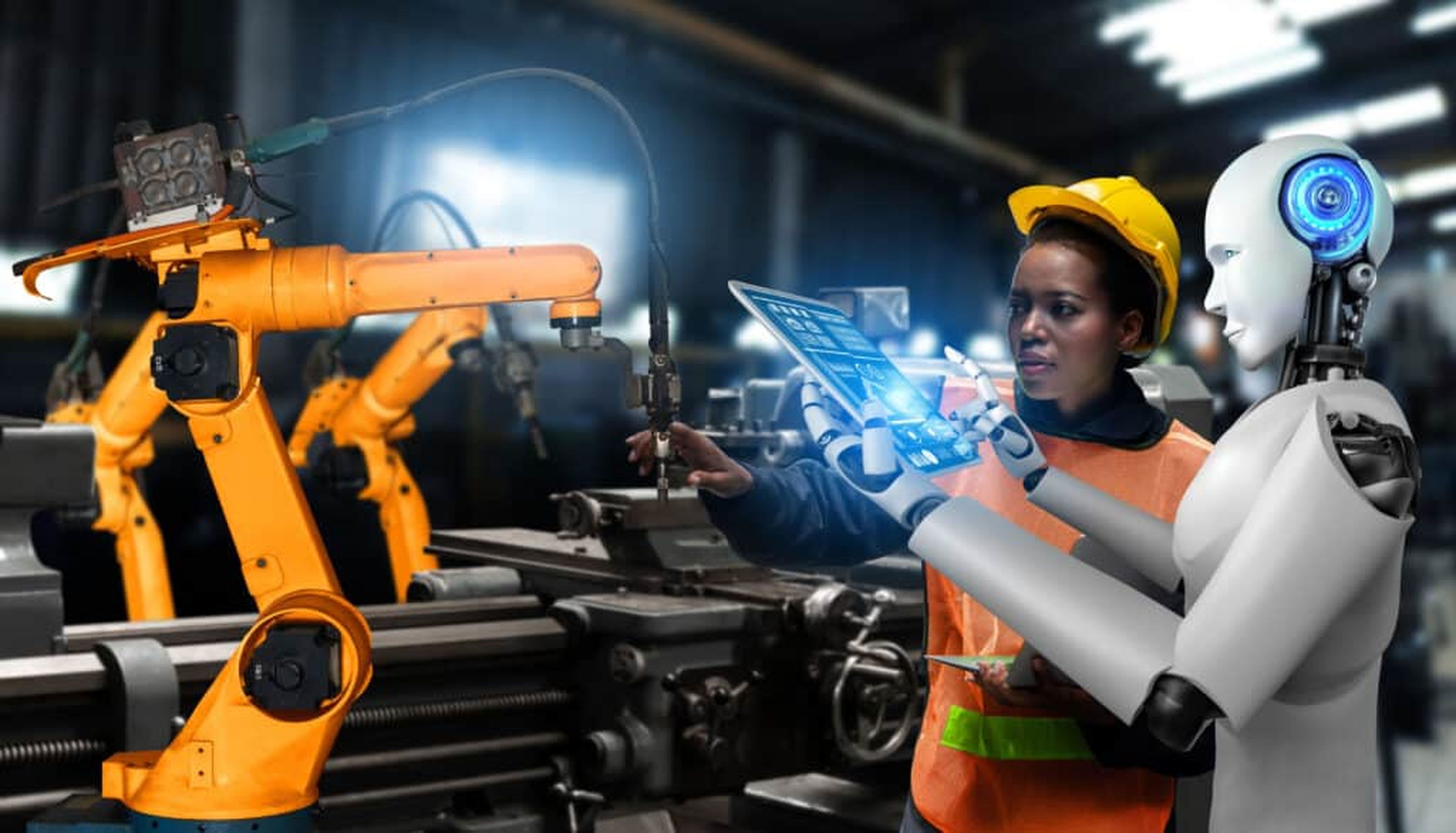
Picture a single facility: AMRs navigating the floor, cobots assembling and palletizing at fixed stations, and a humanoid moving boxes between a pallet and a conveyor.
This isn't science fiction — market data backs it up. Cobot assembly applications account for 26% of total 2024 cobot revenue; palletizing and depalletizing are forecast to grow at 25%+ annually through 2030; the palletizing robot market alone is projected to expand from $1.6–5.1B (2025) to $2.7–67.8B by 2034–35.
AMRs already dominate warehouse picking flow. Humanoids are entering pilots at Amazon, GXO, BMW, and Mercedes-Benz.
The three-robot facility is becoming a real deployment pattern.
🏭 Manufacturing: Role Division
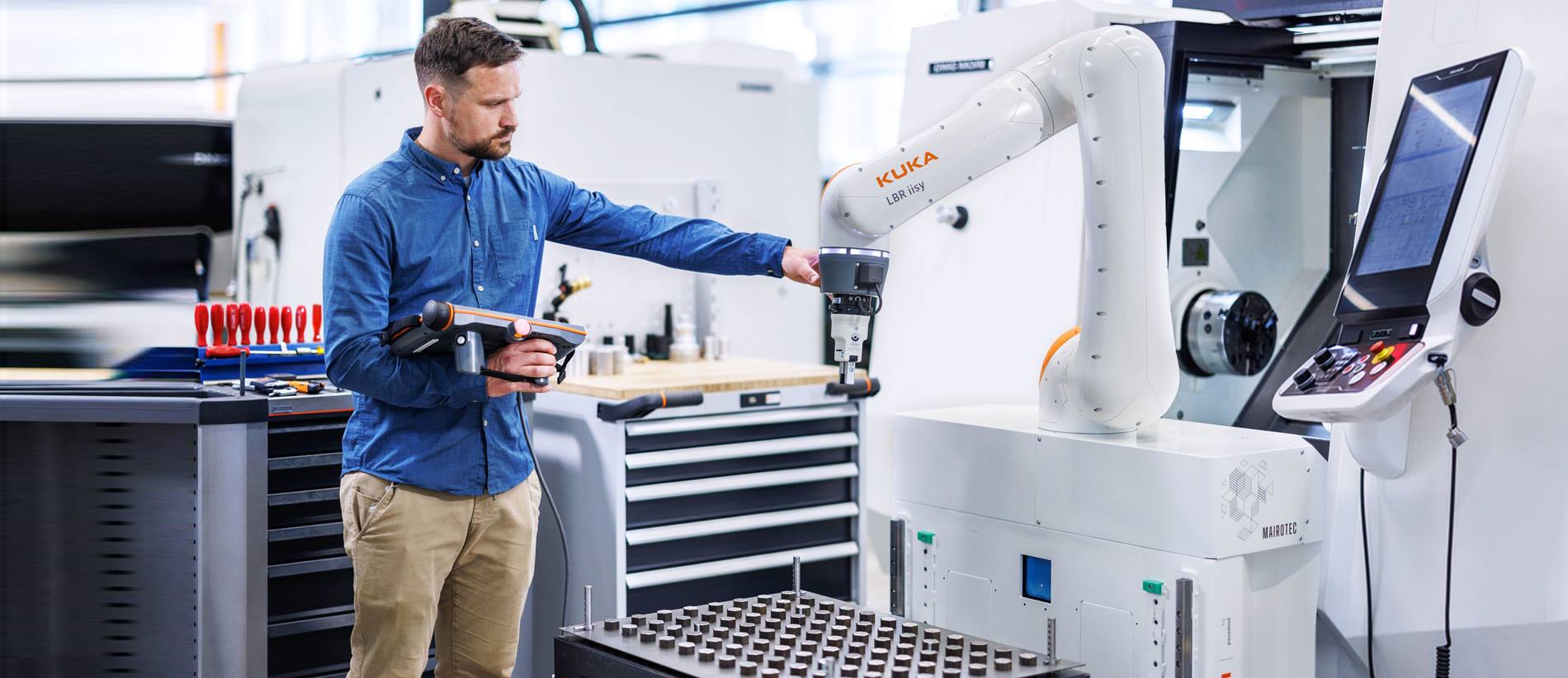
Cobots — the arm at the station
Cobots handle fixed-position, repeatable tasks across the production process:
- Vision inspection — defect detection, position recognition, surface inspection via camera and algorithm
- Welding — consistent arc, spot, and laser welding in high-heat, high-fume environments
- Packaging — placing finished goods into boxes, aligning cases, feeding labelers and tapers
- Assembly — repetitive fastening, press-fitting, and component positioning
- Palletizing/depalletizing — stacking outbound cases onto pallets; unloading inbound pallets to conveyors
The rule: fixed position, repeatable path, structured process → cobot is the right tool.
AMRs — the legs between stations
AMRs handle all inter-node material flow:
- Warehouse → production line: part and inventory replenishment
- Process → process: WIP transfer between work zones
- Production line → inspection/packaging: finished and semi-finished goods routing
- Finished goods → warehouse/dispatch: boxed product outbound transfer
AMRs replace the worker pushing a cart along defined routes.
Humanoids — filling the gaps cobots and AMRs leave
Current pilot patterns show humanoids targeting three overlapping challenges: human-like motion requirements, human-scale infrastructure, and physically demanding manual tasks.
- Box and parts loading/unloading between floor pallets, workbenches, AMRs, and conveyors
- Line-side replenishment: carrying part boxes between racks and production stations
- Navigating stairs, doors, and narrow corridors that AMRs cannot access
- Mercedes-Benz (Apollo/Apptronik), BMW (Figure 01), and Amazon (Digit) are all actively piloting these use cases
Humanoids are stepping in where cobots and AMRs leave awkward human-only gaps.
🚚 Warehousing: Role Division
Cobots — stacking and unstacking at the edges
- Palletizing — stacking outbound cases at the end of shipping lines
- Depalletizing — unloading inbound pallets to conveyors or racks
- Case picking and box handling — transferring cases between conveyors, slides, and sorters; handing totes to operators in goods-to-person (G2P) systems
AMRs — the warehouse backbone
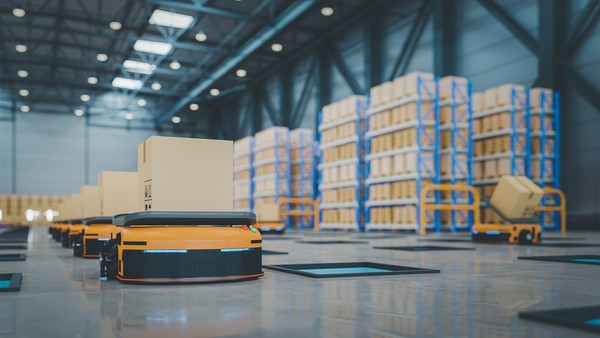
AMRs are the dominant automation layer in modern warehouses:
- Driving under racks and lifting entire shelving units to picking stations
- Carrying shelves, totes, and carts between picking zones, buffer zones, and dispatch areas
- Handling order picking, picking station replenishment, and intra-warehouse transport
DHL, Locus, and comparable operators consistently report the same outcomes: higher picking productivity, reduced picker travel distance, and reduced peak-season staffing pressure. For warehouse mobility, AMRs are already mainstream.
One-line summary: AMRs handle transport between nodes; cobots handle stacking and unstacking at the endpoints.
Humanoids — bridging AMRs and conveyors
Humanoids are targeting the awkward middle ground between AMR drop-off points and conveyor/rack destinations:
- Digit (Agility Robotics) is piloting tote transfers from AMRs to conveyor belts at Amazon and GXO facilities
- A 3PL pilot has Digit assisting at conveyor and sorter stations; Reflex Robotics' humanoid is being tested on recyclable box sorting
If AMRs are the legs and cobots are the arms, humanoids are filling the shoulder-and-torso role — the physical handoff between automated systems that still requires human-like reach, strength, and dexterity.
🏨 Service Environments: Cafés, Hotels, Hospitals
AMR-based service and delivery robots
Most of the serving and delivery robots now visible in restaurants, hotels, and hospitals are effectively AMRs with specialized top modules:
- Restaurant service robots: sensor- and map-based food delivery to tables
- Hotel/hospital delivery robots: room and ward delivery of amenities, medications, and specimens
Cobots and humanoids in service
- Cafés and bars: cobots handle barista, cocktail, and simple cooking tasks — fixed-position, fast-hand operations
- Hotels, retail, events: humanoids are a longer-term candidate for a "human-shaped staff" role combining navigation, guest interaction, and light transport — still largely pilot-stage, but the fit with human-scale service environments makes them an attractive long-term option
👀 Decision Framework: Which Robot for Which Process?

1. Fixed station vs. mobile task?
- Fixed position, repetitive operation → Cobot
- Continuous movement between points → AMR
2. Can the environment be redesigned, or must existing infrastructure be preserved?
- Layout and routes can be reconfigured for robots → Cobot + AMR combination
- Stairs, doors, handles, elevators — human-scale infrastructure that cannot be changed → Humanoid (medium-to-long term)
3. Immediate ROI vs. strategic horizon?
- Clear ROI on a single process → Cobot
- Warehouse or line-wide flow improvement → AMR + WMS/FMS integration
- Labor shortage, aging workforce, shift burden relief at scale → Humanoid + existing robot combination (3–5 year horizon)
The right question is not which robot is best — it's which robot fits which role in your specific facility. Define the gap first; then select the tool.
For risk assessment and safety design ahead of robot deployment, contact Safetics.