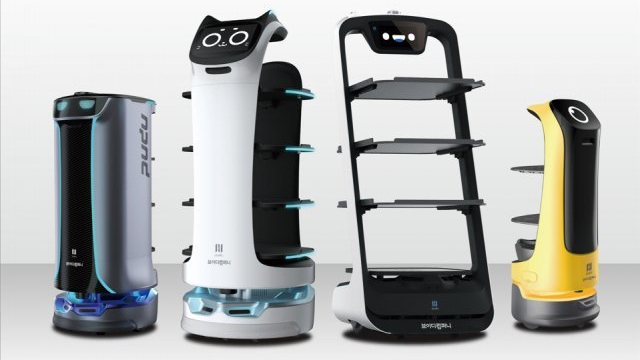
The robot rolling out with a tray of drinks isn't a marketing stunt anymore. The global restaurant service robot market is forecast to grow at ~17% CAGR through 2030; the broader service robot market from $47B (2023) to over $107B by 2030. The International Federation of Robotics (IFR) reported 158,000 professional service robots sold in 2022 alone — a 48% year-on-year increase. Three forces converge: labor shortages, guest demand for fast and novel experiences, and robot costs falling to operationally viable levels.
☕ What Serving Robots Actually Do
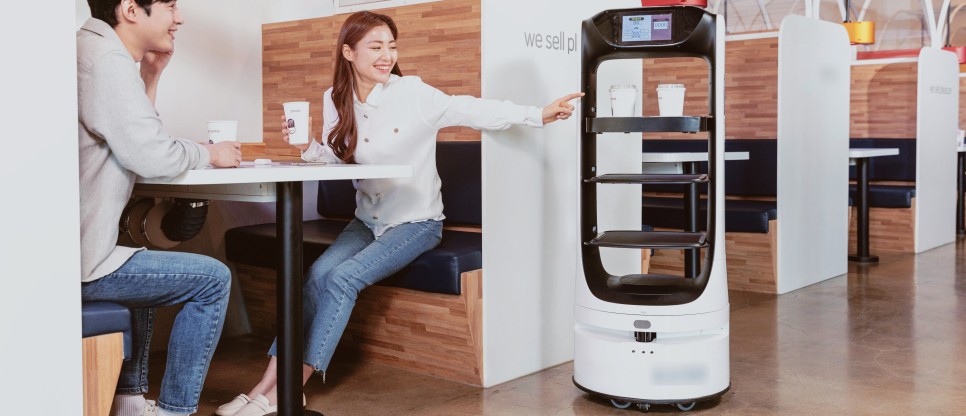
Server role: kitchen to table
The primary use case. Robots collect completed food and beverages from the kitchen or bar and deliver them to the guest table — the traditional server's core physical task. Key advantages: multiple tables can be batched in a single run; the same route can be repeated dozens of times without fatigue. Staff freed from delivery routes can focus on orders, guest interaction, and complaint handling.
Tray and dish collection
The second most common deployment. Guests place used dishes on the passing robot, or call the robot to their table for collection. Particularly valuable in high-table-count venues and those with long kitchen-to-floor distances — reducing staff travel distance meaningfully reduces physical strain across a shift.
Pickup zone and takeout support
In high-delivery-volume venues, robots transport prepared orders from the kitchen to the pickup zone or to a designated waiting area for delivery riders — covering the internal movement that would otherwise require a dedicated staff member.
🧐 The Guest Experience
What guests respond positively to:
- Hygiene and contactless comfort — post-pandemic perception that robot delivery feels cleaner than human contact
- Novelty and entertainment value — robot service as an experience driver, linked to positive reviews and return visits
- Improved staff attentiveness — with physical delivery offloaded, staff spend more time at the table; service quality perception improves
What guests find awkward:
- Custom requests don't translate — "less broth, no onions, extra sauce" still needs a human
- Lower error tolerance — guests forgive a busy staff member; a confused or stalled robot gets a harsher verdict
- Expectation gap — the more human-like the robot's appearance, the larger the gap when it doesn't respond like a human
The practical conclusion: leave interactions requiring judgment and communication to people; hand off repetitive, defined delivery routes to robots.
🙆 The Operator Perspective
Labor shortage, not cost-cutting, is the primary driver
IFR data cites labor shortage as the leading factor in the 2022 service robot surge. F&B operators — facing night/weekend staffing gaps, peak-hour concentration, and high turnover — report deploying robots not to reduce headcount, but because headcount isn't available.
Physical and emotional load reduction
Offloading tray runs reduces musculoskeletal strain and fatigue. Staff redirect energy toward menu explanation, upselling, and complaint resolution — tasks where human interaction adds real value.
Brand image bonus
Robot-equipped venues consistently earn "innovative" and "trendy" associations. Not a standalone justification, but a worthwhile secondary benefit when automation is already under consideration for operational reasons.
✋ Five Things to Check Before Deploying
Layout and traffic flow
- Minimum aisle width for robot passage alongside standing guests
- Clearance around columns, planters, and queue barriers
- Multi-floor venues: is elevator integration available or required?
Robot requirements vary by model — share floor plans, photos, and video with the vendor or system integrator before committing.
Menu and table configuration
- Large platters, hot pots, and soup bowls require stability assessment
- Tables need clear number or QR identification for robot navigation
- If staff need to transfer dishes from robot to table anyway, the workflow gain shrinks significantly
Peak-time ROI simulation
Restaurant service robots are attracting strong investment interest (17–20% CAGR forecast), but individual venue ROI varies widely. Model at minimum: does robot deployment reduce peak staffing by 0.5–1 FTE, increase table turns with the same headcount, or generate measurable indirect returns through guest satisfaction and repeat visits?
Maintenance, support, and network reliability
- Does the robot operate on Wi-Fi/cloud, and what happens when the connection drops?
- What are the vendor's repair SLA and loan-unit policies?
- For multi-location franchises: can IT manage robots as networked devices at scale?
Brand experience design
- Does the robot's form, name, voice, and interaction style fit the venue's brand positioning?
- Is the narrative "a colleague that helps staff" rather than "a replacement for staff"?
- Has the guest interaction flow been designed, or left to chance?
Robots that are integrated into the brand experience are accepted more readily by both guests and staff than those deployed purely as efficiency tools.
One-line summary: A serving robot is not a staff replacement — it's a new team member that takes over the repetitive physical routes so human staff can focus where it counts. Start by identifying the most exhausting delivery corridor in your venue, check whether the layout supports it, and simulate the numbers before committing.
For risk assessment and safety design ahead of robot deployment, contact Safetics.