🚀 Is Your Facility Ready for Humanoid Robots?
Most factories and warehouses won't be deploying dozens of humanoids next year.
But preparing now makes sense for three reasons: automation gaps already exist between cobots, AMRs, and conveyors — and humans are still filling them; humanoids are specifically targeting those gaps; and infrastructure designed today will either accommodate humanoids later or require costly redesign.
The goal isn't to buy a humanoid — it's to build a facility where one could walk in and get to work.
1️⃣ Map Your Candidate Tasks Now

Before evaluating technology, build a task inventory. High-fit humanoid candidate tasks share a common profile:
✅ Repetitive heavy lifting at fixed or near-fixed locations
- Palletizing and depalletizing
- Line-side parts replenishment from racks
- Loading and unloading rack levels
✅ Continuous inter-node transport by a dedicated person
- Warehouse ↔ production line
- Finished goods ↔ dispatch staging
- Main line ↔ rework or recycling line
✅ Human gap-filling between automated systems
- A person placing AMR-delivered totes onto a conveyor
- A person transferring output from an automated line into the next piece of equipment
✅ Areas where cobots and AMRs couldn't reach
- Cross-floor movement requiring stairs
- Storage rooms accessible only through doors
- Narrow corridors or spaces requiring a door handle
This inventory becomes the starting point for any future humanoid pilot conversation.
2️⃣ Design Today's Automation With Tomorrow's Humanoid in Mind
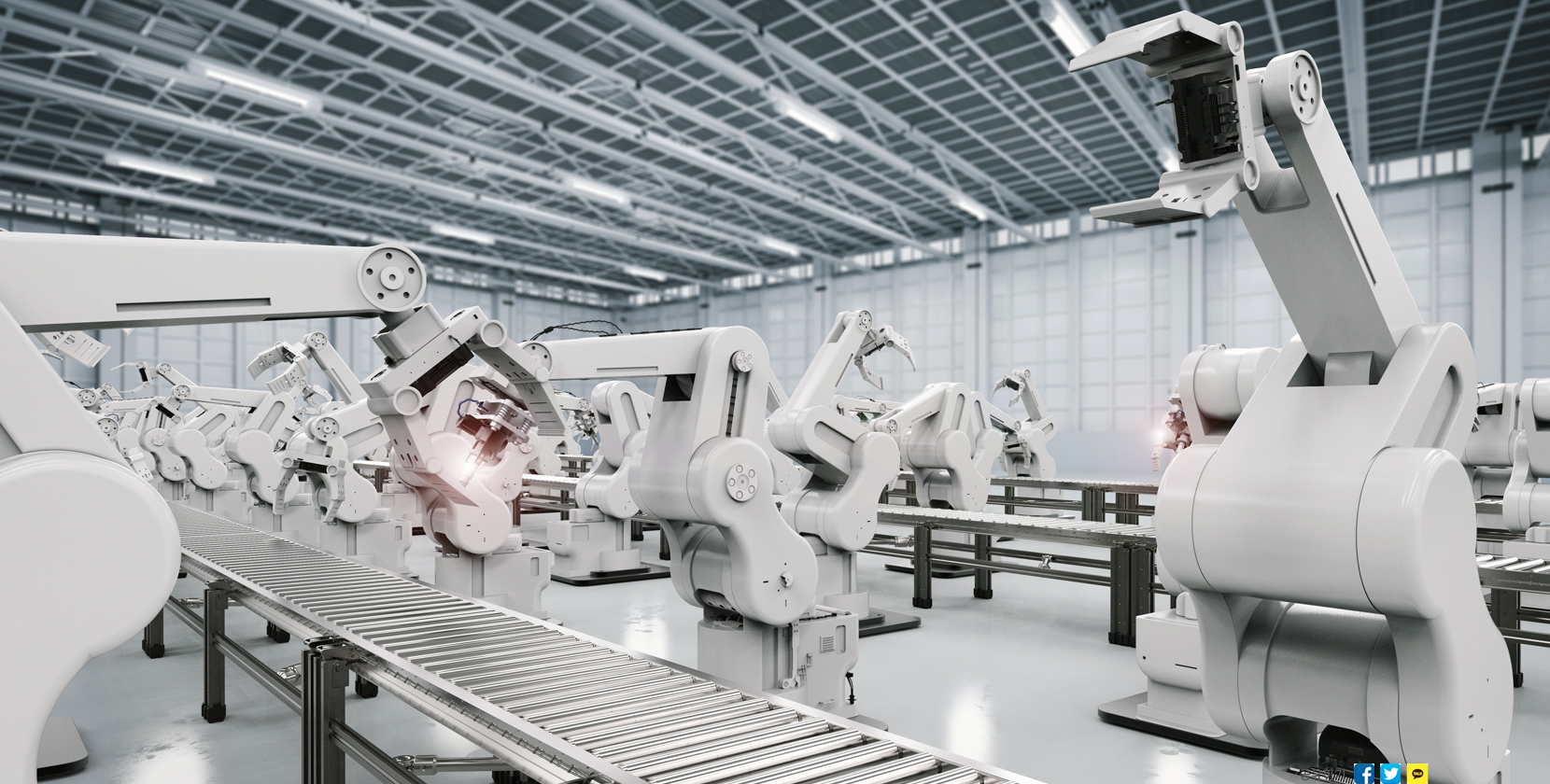
Humanoids won't replace cobots and AMRs — they'll work alongside them. Design current automation with that combined picture in mind.
Cobot-appropriate zones: Fixed-position, repetitive tasks — assembly, fastening, pick-and-pack, machine loading/unloading.
AMR-appropriate zones: Inter-process transport — warehouse to production line, production line to inspection and packaging.
Humanoid-appropriate gaps: Stairs, doors, narrow passages, manual switches and handles — anywhere cobots and AMRs can't reach.
When scoping current automation investments, ask:
- Is this process fully covered by cobots and AMRs, or will a human gap remain?
- If a humanoid were deployed here later, where would it stand?
- Does the current layout leave room for that?
Automation designed with these questions answered becomes a foundation for the next generation of robotics, not just the current one.
3️⃣ Build the Safety Foundation
Safety requirements for humanoids aren't fundamentally different from those for cobots and AMRs. Establish reusable safety infrastructure now.
Risk assessment routine
Every new process, equipment addition, or robot introduction requires a fresh risk assessment. Build a checklist covering:
- Where does the robot operate in proximity to people?
- Where could pinch points, collisions, or entanglement occur?
- Are there trip, slip, or falling-object hazards?
A well-structured checklist applies to cobots, AMRs, and humanoids alike — it becomes a reusable safety framework across all robot types.
SOP and safety training
Add "working alongside robots" basics to onboarding and periodic safety training:
- Do not push, pull, or physically interfere with robots
- Report abnormal behavior immediately to the responsible person
- Never obstruct safety sensors, scanners, or emergency stop buttons
These rules apply identically to current equipment and to any humanoid that follows.
4️⃣ Use Digital Twin Simulation to Preview the Mixed-Robot Facility

Planning a facility with cobots, AMRs, and humanoids operating simultaneously is difficult on paper. Digital twin simulation makes it tractable:
- Identify route conflicts and bottlenecks before committing to a layout
- Calculate minimum separation distances, speed limits, and deceleration zones for human-robot interaction
- Map AMR and humanoid travel paths and design safety sensor and scanner placement accordingly
Safetics' SafetyDesigner supports this workflow — enabling 3D process design and sharing across safety engineers, production engineers, and robot system integrators (SIs), integrating safety measures at the design stage to avoid costly downstream changes, and consolidating risk assessment for automated facilities in a single platform.
Digital transformation of the facility comes before the humanoid arrives — not after.
5️⃣ Prepare the Organization, Not Just the Infrastructure
Robot deployment is ultimately a people challenge as much as a technology one. Build the right conditions in advance:
- Frame the message as "a colleague that shares the hard work," not "a machine that takes jobs"
- Before deployment, involve workers in defining which tasks transfer to robots and how their own roles evolve
- Give the people most involved in early robot setup proper training, authority, and feedback channels
Humanoids — more human in appearance than any previous robot — will provoke stronger emotional responses on the floor. Organizational readiness matters proportionally more. Technical preparation and people preparation need to move together.
The one-line summary: Don't buy a humanoid yet — build a facility where one could integrate naturally when the time comes. That means mapping candidate tasks, designing current automation with the combined robot picture in mind, establishing reusable safety infrastructure, simulating the mixed-robot facility in digital twin, and preparing the organization alongside the infrastructure.
For risk assessment and safety design ahead of robot deployment, contact Safetics.