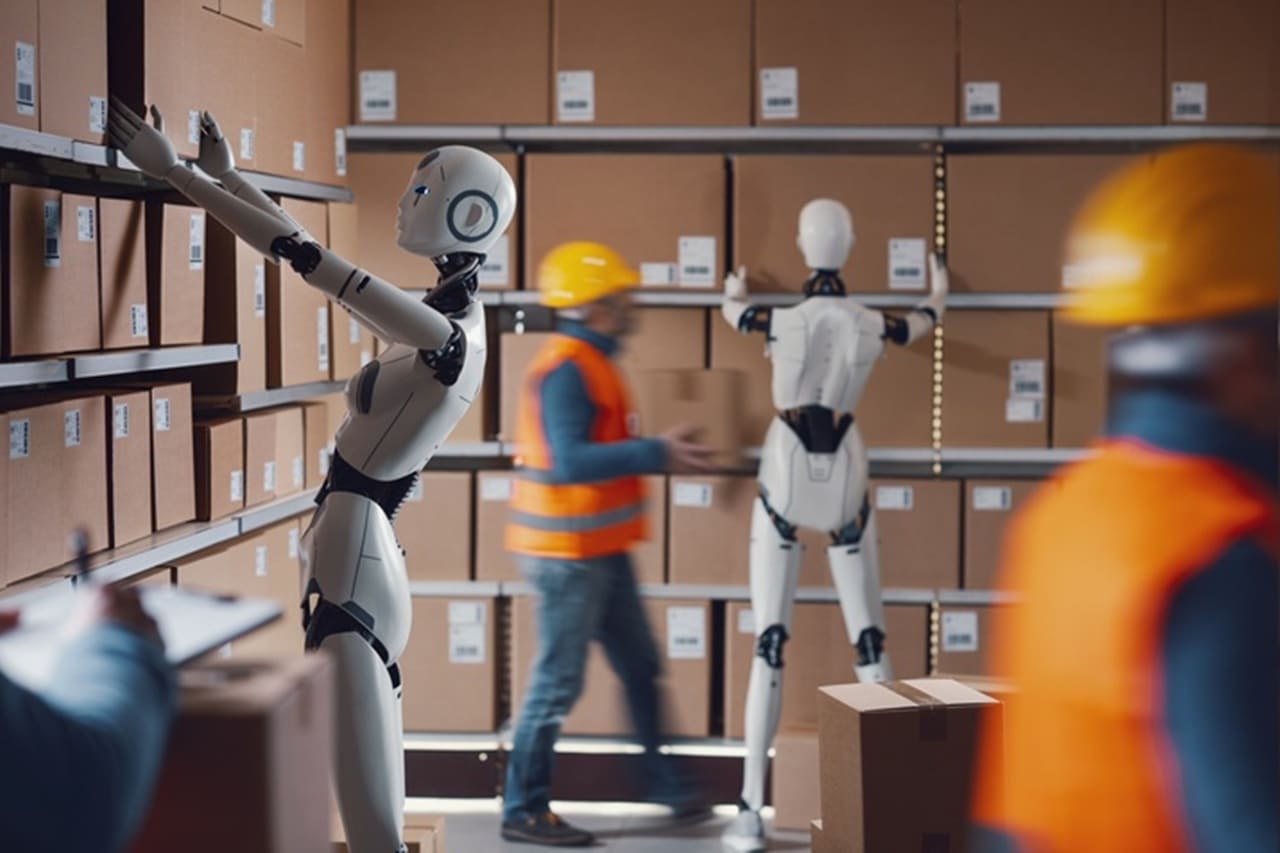
Cobots were originally recognized as safe automation tools for human-robot shared workspaces. Generative AI is now redefining what a cobot is. Robots are evolving from machines that follow programmed paths to collaborative partners that understand human language and intent, and respond to context in real time.
Doosan Robotics × AWS — Voice-Controlled Cobots
At Automatica 2025 in Munich, Doosan Robotics and AWS demonstrated a voice-recognition cobot: a visitor says "place this part on the right shelf," and the robot interprets and executes the instruction in real time. The practical significance: workers whose hands are occupied can control robots by voice alone, improving both productivity and safety. This is not a concept demo — it marks the point at which natural language interpretation and real-time execution have converged in a production-ready system.
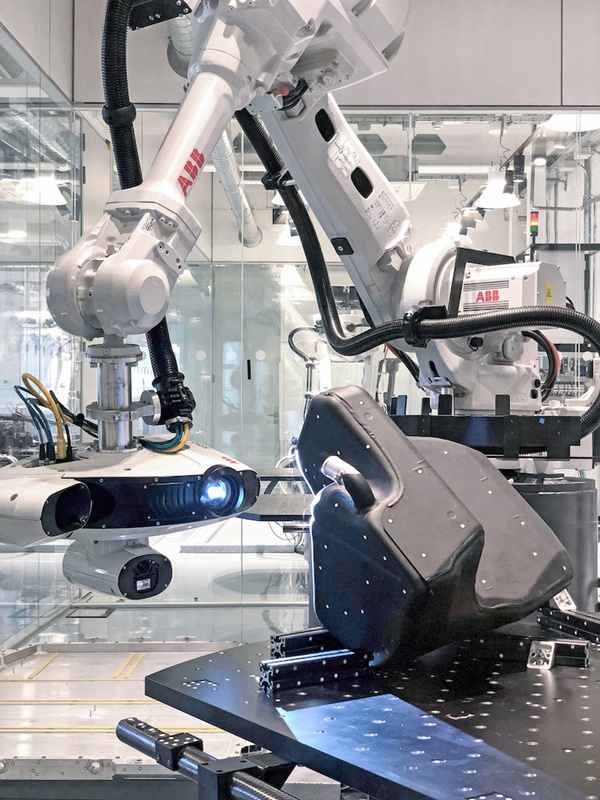
ABB — Generative AI + 3D Vision
ABB is combining 3D vision with generative AI to enable robots to interpret object shape, position, and context autonomously — not just perceive, but reason about the most efficient approach to a task and learn from it. In logistics, this means flexible handling of varied cargo sizes and packaging states far beyond what rule-based algorithms can manage. In semiconductor assembly, it enables automated identification and assembly of sub-0.1mm components with simultaneous quality inspection.
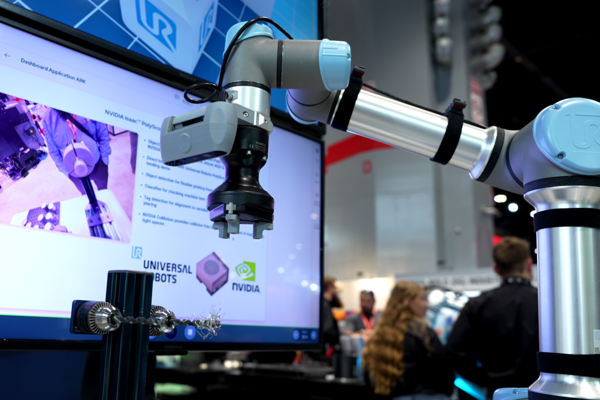
Universal Robots — Democratizing Automation
UR's strategic direction is encapsulated in one forecast: "AI will be quietly embedded in every robot." The goal is to eliminate the coding expertise barrier entirely — enabling SME manufacturers to automate assembly processes through simple setup and generative AI-based instruction, without specialist engineers. This shifts automation from a large-enterprise capability to a universally accessible tool.
Industry Use Cases
Logistics
A fulfillment center manager issues a voice command: "prepare stock from Rack 12, Zone B for dispatch." The robot locates the cargo and positions it on the outbound line automatically — reducing labor dependency and compressing dispatch cycle time.
Electronics & Semiconductors
AI robots assemble micro-components at sub-0.1mm tolerance at high speed while simultaneously inspecting quality. Where defect rates previously varied with operator skill, AI-learning-based robots maintain stable quality standards consistently.
Food & Beverage
Cooking robots in fast-food environments receive customer orders and execute the cooking sequence automatically. Generative AI adjusts cooking speed to order volume and proactively alerts managers to ingredient shortages — moving beyond reactive execution to active operational management.
Healthcare & Service
Surgical-assist robots prepare instruments on voice instruction from medical staff. Ward navigation robots understand patient questions in natural language and provide appropriate guidance — enabling intelligent human interaction rather than scripted response loops.
A New Era of Collaboration
Cobots are no longer simply safe machines working beside people — they are evolving into partners that share language and understand intent. Doosan Robotics, ABB, and Universal Robots are accelerating this transition. The AI-native cobot is becoming an everyday presence across industry sooner than most timelines projected.
For risk assessment and safety design ahead of robot deployment, contact Safetics.