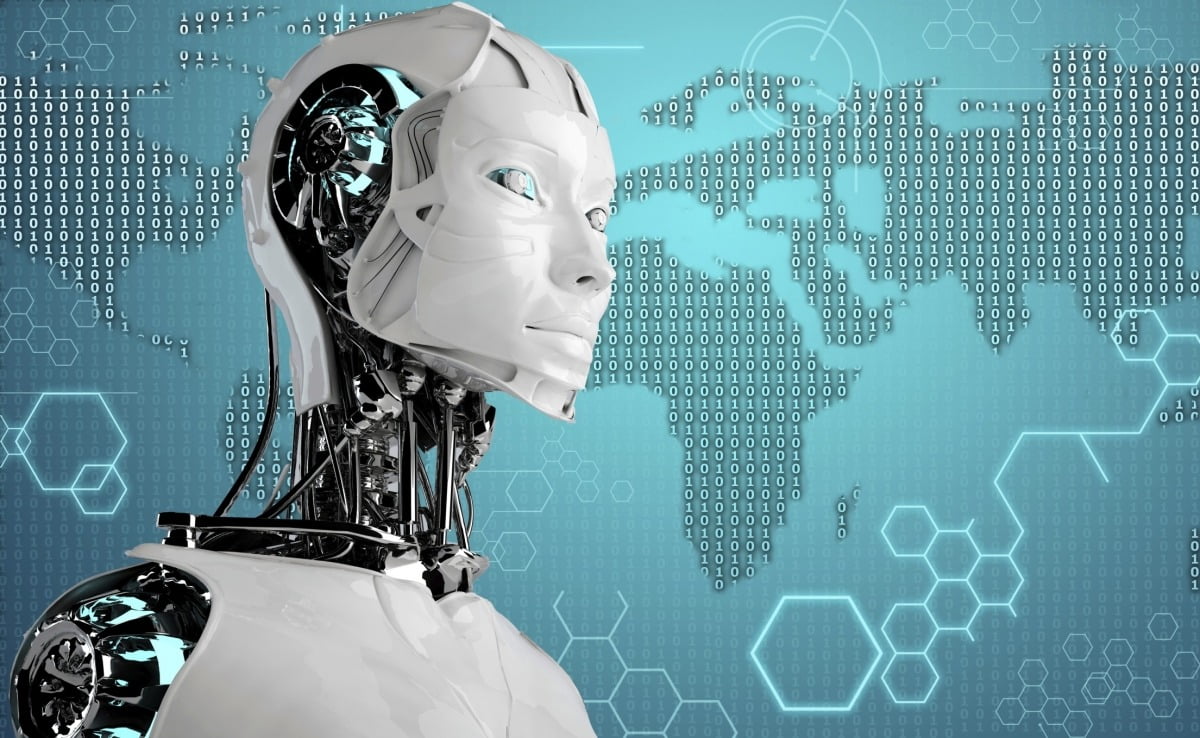
Where robots once followed fixed paths and repeated identical tasks, today's robots perceive their environment, interpret context, and make autonomous decisions. This is not incremental technical progress — it is a fundamental change in how humans and robots work together.
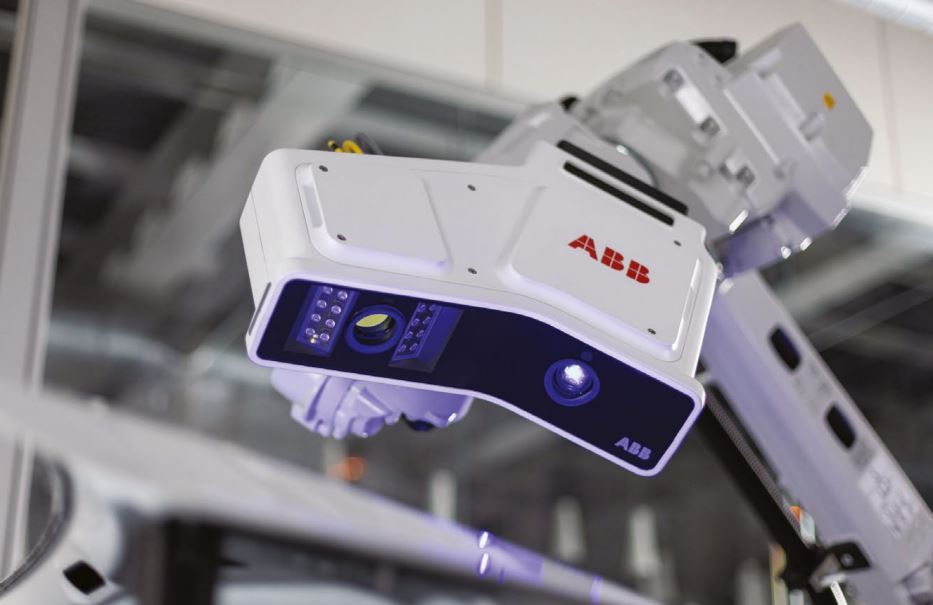
Giving Robots Eyes and a Brain
ABB has articulated the trajectory precisely: "If the last decade gave robots eyes (3D vision), hands (precision sensing), and feet (autonomous navigation), generative AI now integrates all of these capabilities." The result is a robot that doesn't just execute assigned tasks, but understands situations, learns from them, and makes better decisions over time.
Conventional industrial robots required reprogramming whenever the work environment changed even slightly. AI-enabled robots recognize new environments autonomously and adapt to variable conditions — reducing defect rates, improving efficiency, and responding flexibly to unexpected situations. For floor managers, this translates to a level of operational reliability that previous automation could not provide.

Lowering the Barrier to Entry
A second reason AI robots are attracting attention: they are dramatically easier to use. KUKA's new operating system, iiQKA.OS2, combined with AI-based programming, replaces complex code written by specialist engineers with intuitive interfaces and voice commands. For SME manufacturers without automation expertise, this removes the largest adoption barrier — simple setup is now sufficient to deploy a robot on the floor. The result: automation is becoming accessible across a far broader range of industries and company sizes.
Why AI Robots Are Now a Competitive Necessity
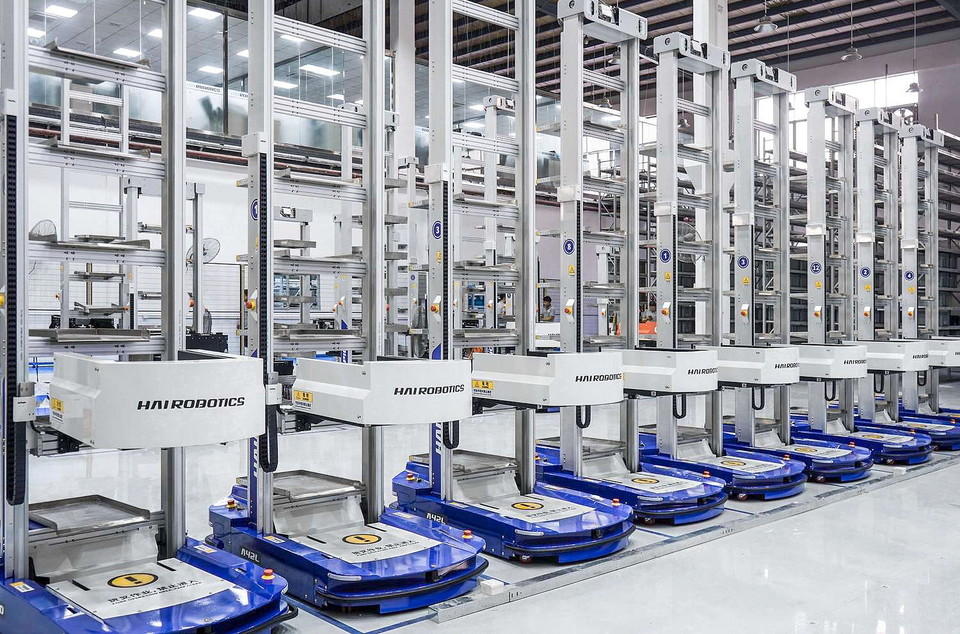
Global labor shortages and rising productivity pressure are the structural drivers. Manufacturing and logistics face compounding workforce challenges from aging populations and demographic decline, while quality and speed demands continue to rise. In this environment, AI robots are no longer a cost-reduction tool — they are a survival and competitiveness mechanism.
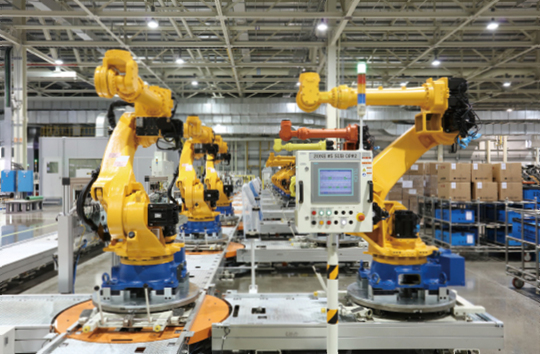
Concrete applications: in logistics, AI robots sort and transport products in warehouses and enable 24/7 uninterrupted operations; in manufacturing, they handle precision welding and assembly while protecting worker safety; in service, automation is extending to coffee preparation, cooking, and customer interaction.
Global Players: Strategic Moves
- Doosan Robotics × AWS — Voice-recognition cobot demonstrating "speak-to-operate" capability
- ABB — Next-generation generative AI-integrated robot solutions adapting to unpredictable variables
- Universal Robots — "AI will be quietly embedded in every robot system" — positioning AI as the new automation baseline
- FANUC — Donating robot equipment to US educational institutions and running hands-on training programs, building the talent ecosystem alongside the technology
FANUC's approach is particularly notable: investing in human capability development as a parallel strategy to technology deployment — recognizing that the AI robot era requires a workforce prepared to work with it.
Outlook
AI robots are already delivering meaningful outcomes across industries, and the scope of their impact will only expand. The evolution — from repetitive execution to environmental perception, self-learning, and adaptive response — simultaneously delivers two forms of value: operational efficiency and competitive advantage for companies; safer working conditions and labor supplementation for society.
AI robots are becoming not just automation equipment, but core strategic assets driving corporate innovation and national productivity. Upcoming installments in this series will examine generative AI and cobots, industry-specific deployment cases, and the role AI robots will play in the society ahead.
For risk assessment and safety design ahead of robot deployment, contact Safetics.