Cobot Grippers Evolving with AI and Digital Twin Technology
The cobot gripper was once simply a tool for picking up objects. AI and digital twin integration are redefining it as a core component of intelligent manufacturing — capable of learning, adapting, and self-optimizing in ways that rule-based systems cannot.
AI-Enabled Intelligent Grippers
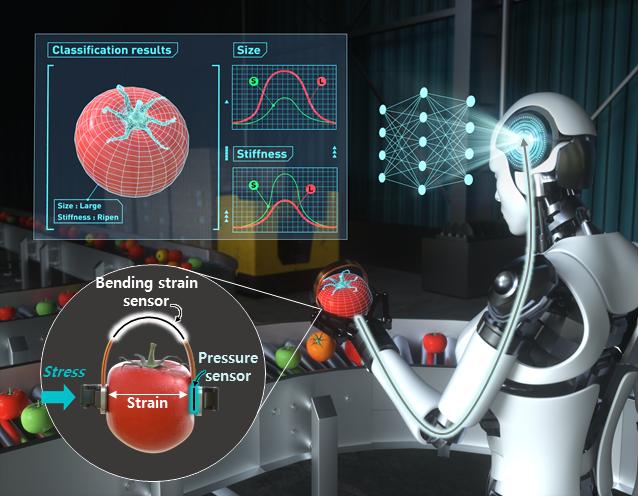
Three capabilities distinguish AI-driven grippers from their predecessors:
- Intelligent object recognition — the gripper identifies size, shape, and texture autonomously, selecting the optimal grip strategy without reprogramming
- Defect rate reduction — data-driven learning minimizes handling errors across repeated cycles, stabilizing quality output
- Cross-product adaptability — in food, electronics, and logistics environments, AI learning enables rapid adaptation when product types change
In electronics assembly lines handling hundreds of component variants, AI grippers select and apply the correct grip for each part — maintaining throughput without manual reconfiguration.
Digital Twin: What It Adds

Digital twin technology replicates the physical gripper and its operating environment in a virtual model, enabling:
- Virtual simulation — new product handling scenarios tested without stopping the production line, minimizing downtime
- Design validation — gripper designs verified and refined in simulation before physical fabrication, reducing development cost and time
- Predictive maintenance — sensor data from the gripper feeds anomaly detection algorithms, enabling intervention before failure occurs
In automotive parts assembly, digital twin simulation pre-validates collision risks across component variants — reducing defect rates before a physical line change is made.
Market Data by Industry
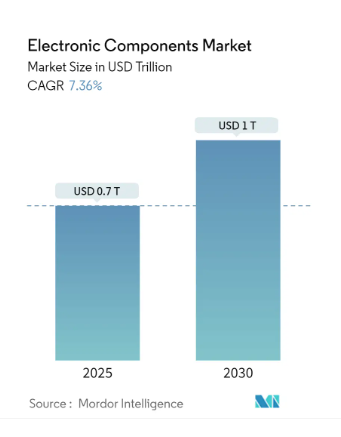
Industry | Market Size & Forecast | CAGR |
|---|---|---|
Automotive robotics | $16.3B (2025) → $31.6B (2030) | 14.18% |
Logistics automation | $78.2B (2024) → $212.8B (2032) | 13.4% |
Food & beverage cobots | 8,000+ units in use (2025), +45% vs. 2022 | — |
Electronics/semiconductors | $701B (2025) → $1T (2030) | 7.36% |
Soft gripper adoption in food manufacturing is accelerating particularly fast, driven by hygiene and product-safety requirements that rigid grippers cannot satisfy.
Deployment Cases
- Automotive — Global OEMs are deploying AI-based grippers on assembly lines to maintain flexibility across frequent part changeovers without productivity loss
- Logistics — Large logistics operators are using digital twin simulation to optimize fulfillment center layouts and cobot gripper placement, improving picking efficiency and worker safety
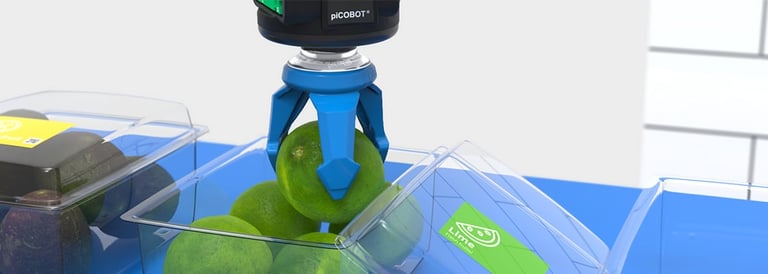
- Food — Packaging companies deploy soft grippers for irregular-shaped products, meeting hygiene standards while minimizing product damage
- Electronics/Semiconductors — Digital twin simulation optimizes micro-component handling processes on semiconductor assembly lines, sustaining precision at production speed
Deployment Considerations
- ROI analysis — high initial investment; long-term returns proven through defect reduction and productivity gains
- Cybersecurity — digital twin and AI systems connect to cloud and IoT networks; ISO/IEC 27001 or equivalent cybersecurity framework required
- Standards compliance — gripper systems must be compatible with ISO/TS 15066 collaborative robot safety requirements and support interface standardization across robot brands
- Workforce capability — data analysis skills and maintenance expertise are critical to deployment success; staff training is not optional
From Hand to Smart Hand
AI and digital twin technology are elevating the cobot gripper from a picking tool to a cornerstone of smart manufacturing. The market data confirms this is not a future trend — it is already in motion. Manufacturing competitiveness will increasingly depend on how quickly and effectively organizations deploy and leverage these intelligent end-effectors.
For risk assessment and safety design ahead of robot deployment, contact Safetics.