Korea has achieved the world's highest robot density — 1,012 robots per 10,000 employees (2023, IFR) — surpassing Singapore. Globally, 541,302 manufacturing robots were newly installed in 2023, the second-highest volume on record, with China accounting for 51% (276,288 units). Here's what leading deployments look like in practice.
🔋 EV & Battery: Hyundai Motor and LG Energy Solution
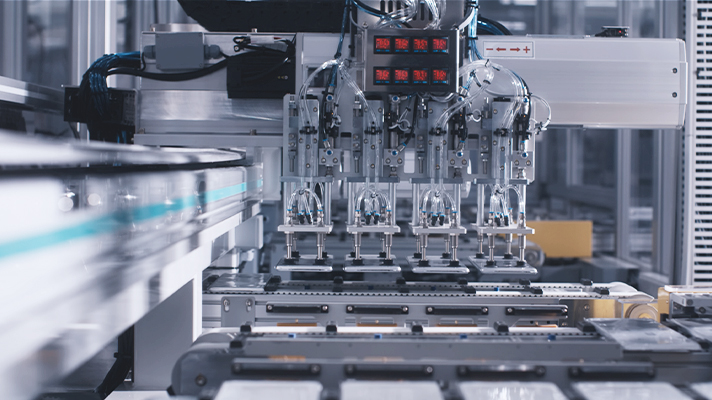
Hyundai IONIQ 5 Battery Pack Assembly
Hyundai's IONIQ 5 production line uses 6-axis articulated robots for fully automated battery pack assembly — bolt and nut fastening included. The tolerance on stacking 12 battery cells into one module: ±0.2mm. The result: near-zero defect rates and one vehicle produced every two minutes, among the fastest cycle times globally.
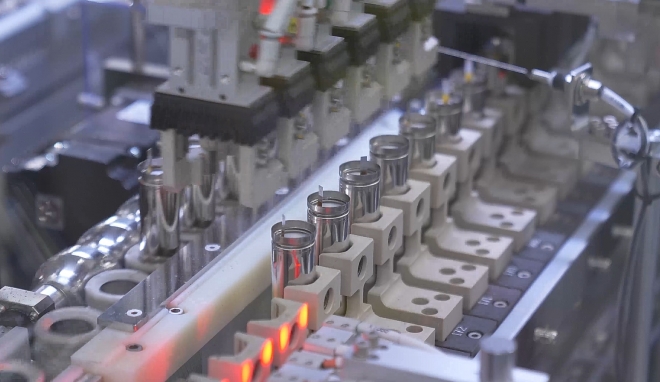
LG Energy Solution — Ochang Energy Plant
LG Energy Solution's Ochang "Mother Line" uses robots to automatically transfer cylindrical battery semi-finished products — a core process in EV battery manufacturing at scale.
🔬 Semiconductors: Samsung's 2030 Unmanned Fab Plan
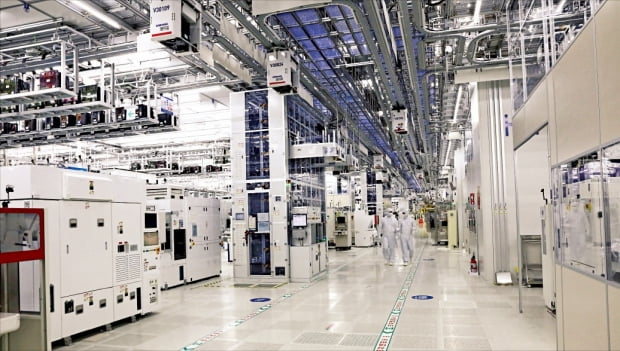
Samsung Electronics has officially announced plans to transition to fully unmanned semiconductor fabrication by 2030 — no production personnel, machines and robots only. An Autonomous Fab Task Force has been established within the DS division to execute the transition.
AI and machine learning-based automation is already running in Samsung fabs. Reported outcomes from automation rollout to date: required headcount reduced by 50%, equipment managed per person increased 2.3×, overall productivity improved 1.6×.
On the market side: the US automotive industry installed 13,700 industrial robots in 2024 — a 10.7% year-on-year increase — signaling accelerating robot adoption across manufacturing broadly.
📦 Logistics: Coupang and Amazon
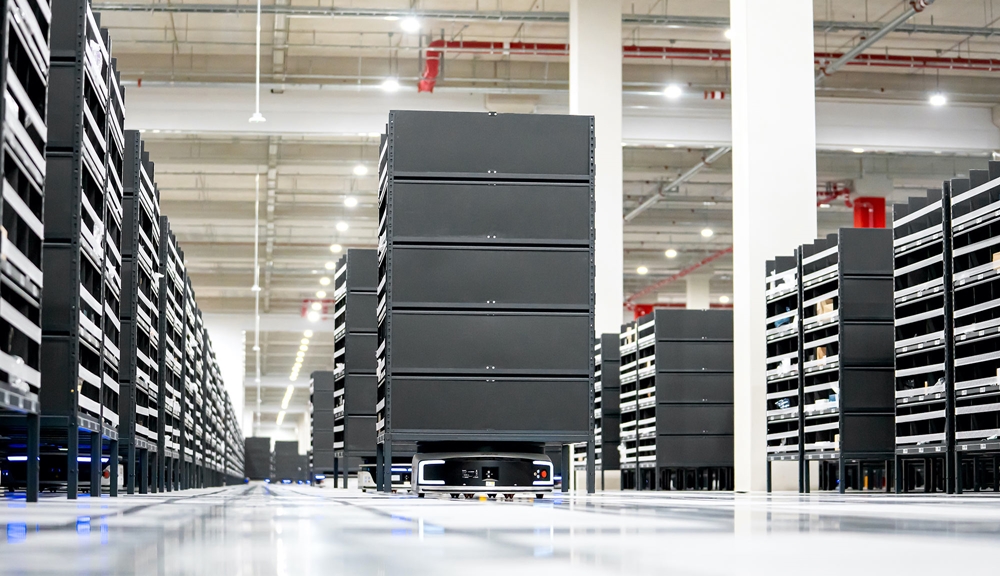
Coupang — Daegu Fulfillment Center
Coupang invested KRW 320B in its Daegu fulfillment center — the largest in Asia. Over 1,000 AGVs operate on floors 7 and 9, automating product storage and picking across a floor area equivalent to 46 football pitches. Outcome: floor worker workload reduced by 65%; hundreds of items delivered to staff within an average of two minutes.
Amazon — Kiva System
Amazon acquired Kiva Systems for $775M in 2012 — one of the most consequential events in logistics automation history. The company now operates over 1 million robots across its global fulfillment network. Outcomes: fulfillment center operating costs reduced by 20%; inventory turn speed improved 3×.
🎯 Why Now Is the Critical Window
Driver | Evidence |
|---|---|
Labor shortage | Skilled manufacturing labor increasingly difficult to source; safety risk in hazardous environments |
Precision requirements | 0.2mm tolerance assembly (Hyundai) now standard in EV manufacturing |
Productivity | Hyundai: 1 vehicle/2 min, near-zero defects; Samsung: 1.6× productivity gain |
Scale | Coupang: 1,000+ AGVs; Amazon: 1M+ robots |
Operational efficiency | Coupang: 65% workload reduction; Amazon: 20% cost reduction, 3× throughput |
💡 Action Plan for Practitioners
Step 1 — Benchmark
Analyze leading companies' outcomes by sector; identify applicable areas within your own operations.
Step 2 — Pilot (ROI-gated)
Apply to highest-priority process first, as Hyundai did. Measure outcomes over 3–6 months before expanding.
Step 3 — Scale
Expand based on proven results; develop a 10-year roadmap as Samsung has done.
Step 4 — Integrate
Build toward a smart factory connecting AI and IoT; establish a continuous improvement cycle.
Korea's world-leading robot density and the ROI figures from Hyundai, Samsung, Coupang, and Amazon make the case clearly. The question is not whether to automate — it's how fast and where to start.
For risk assessment and safety design ahead of robot deployment, contact Safetics.