
"Move this box to the left." "Clean the floor." A single spoken instruction, and the robot responds. What sounds like a film scene is now a live technology shift: natural language-based robot control is arriving as the next major inflection point in global robotics.
🧠 What Is Natural Language Robot Control?
Conventional robot control required specialized programs, coordinate values, and scripted commands. Large language model (LLM)-based control replaces all of that — robots can now be operated through ordinary speech or text, with no teach pendant or scripting required. The user experience is fundamentally different.
🔎Three Real Cases
1️⃣ Figure AI × OpenAI — GPT Inside a Robot Body
In 2024, Figure AI partnered with OpenAI to demonstrate a GPT-4-powered humanoid. A person gives verbal instructions — "take the water bottle out of the fridge," "put it on the table" — and the robot interprets the intent, sequence, and target location autonomously, then executes. The gap from conventional robots is immediately visible: the model reasons about the task, not just the command.
2️⃣ Google DeepMind RT-2 — Vision and Language, Combined
RT-2 (Robotic Transformer 2) integrates image and text understanding into a single model. A person points at an object and says "throw this in the trash" — the robot processes visual context and verbal instruction simultaneously. RT-2 also handles multiple languages and speech styles, and connects general language AI with robot sensor and visual data — a genuine attempt at a robot that thinks before it acts.
3️⃣ Covariant — Natural Language in Live Logistics Operations
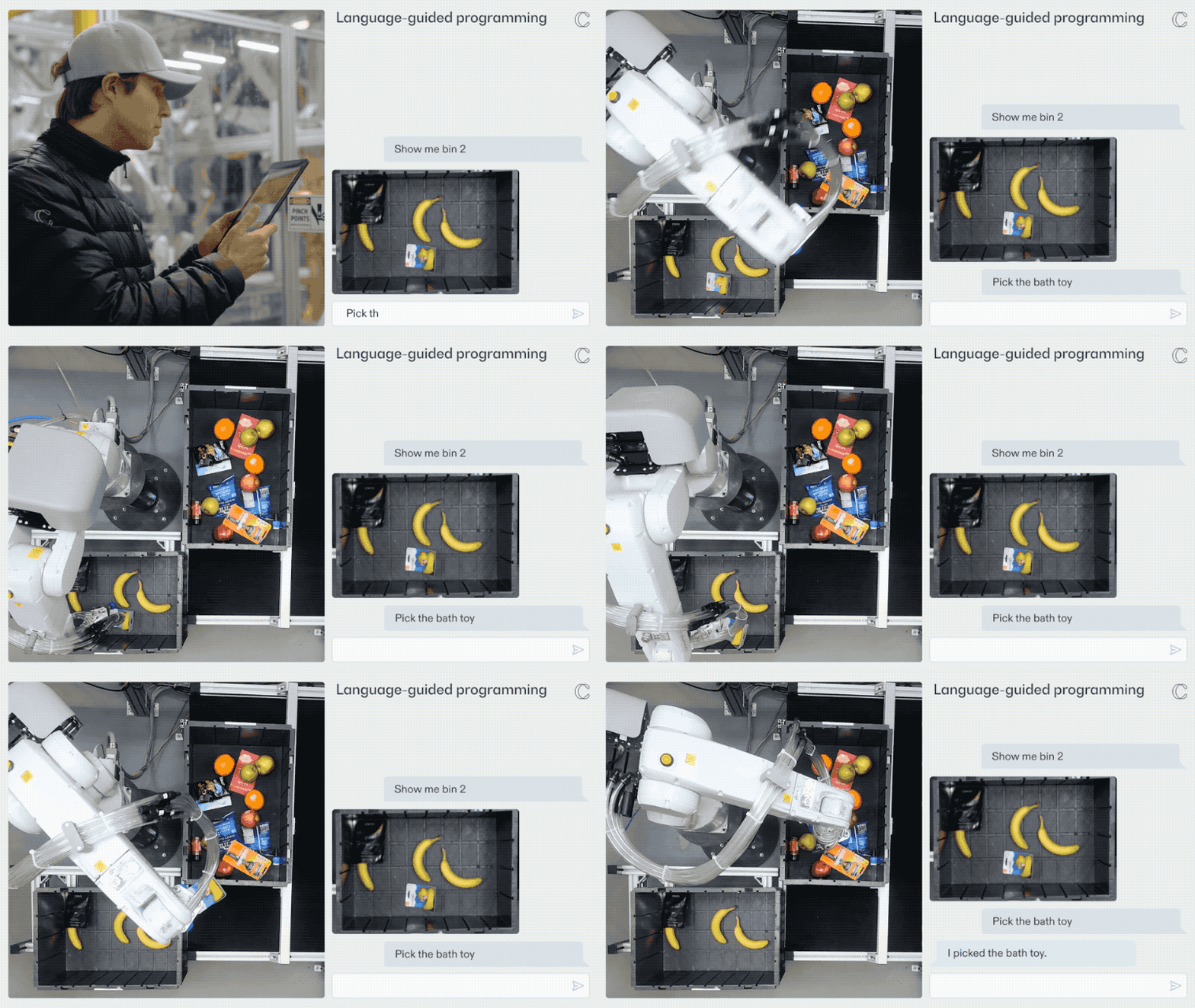
US AI logistics automation company Covariant has integrated natural language interfaces into robots already operating in fulfillment centers. Previously, operators configured tasks through a dedicated app. Now, "take the blue box from that shelf" is sufficient — no UI required. The system supports adaptive judgment across varied products and environments.
✅ What This Means
Natural language robot control isn't just a convenience improvement — it dramatically lowers the barrier to robot adoption. No programming knowledge, no specialized training required: anyone can operate a robot. Manufacturing, logistics, service, and home environments may all default to natural language interfaces as the standard. The robots are listening. They might just answer.
For risk assessment and safety design ahead of robot deployment, contact Safetics.