Robot innovation is no longer just about performance — it's about structure. Robots that work beside people, navigate tight spaces, and reconfigure for different tasks are proliferating across industries. Here's what's driving the structural evolution and why it matters.
🔥Five Structural Innovations to Know
🐾 Quadruped Robots — Stable on Any Terrain
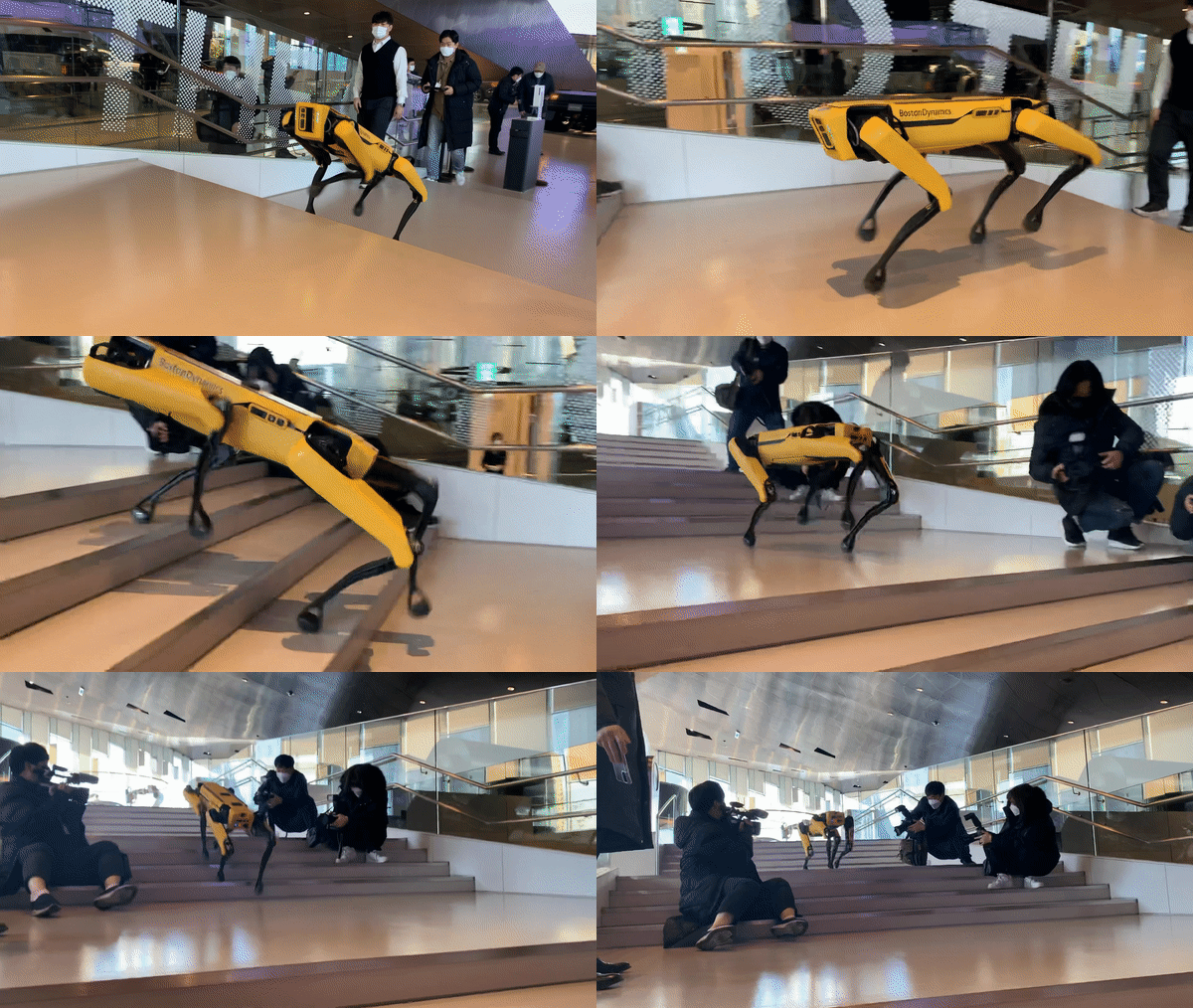
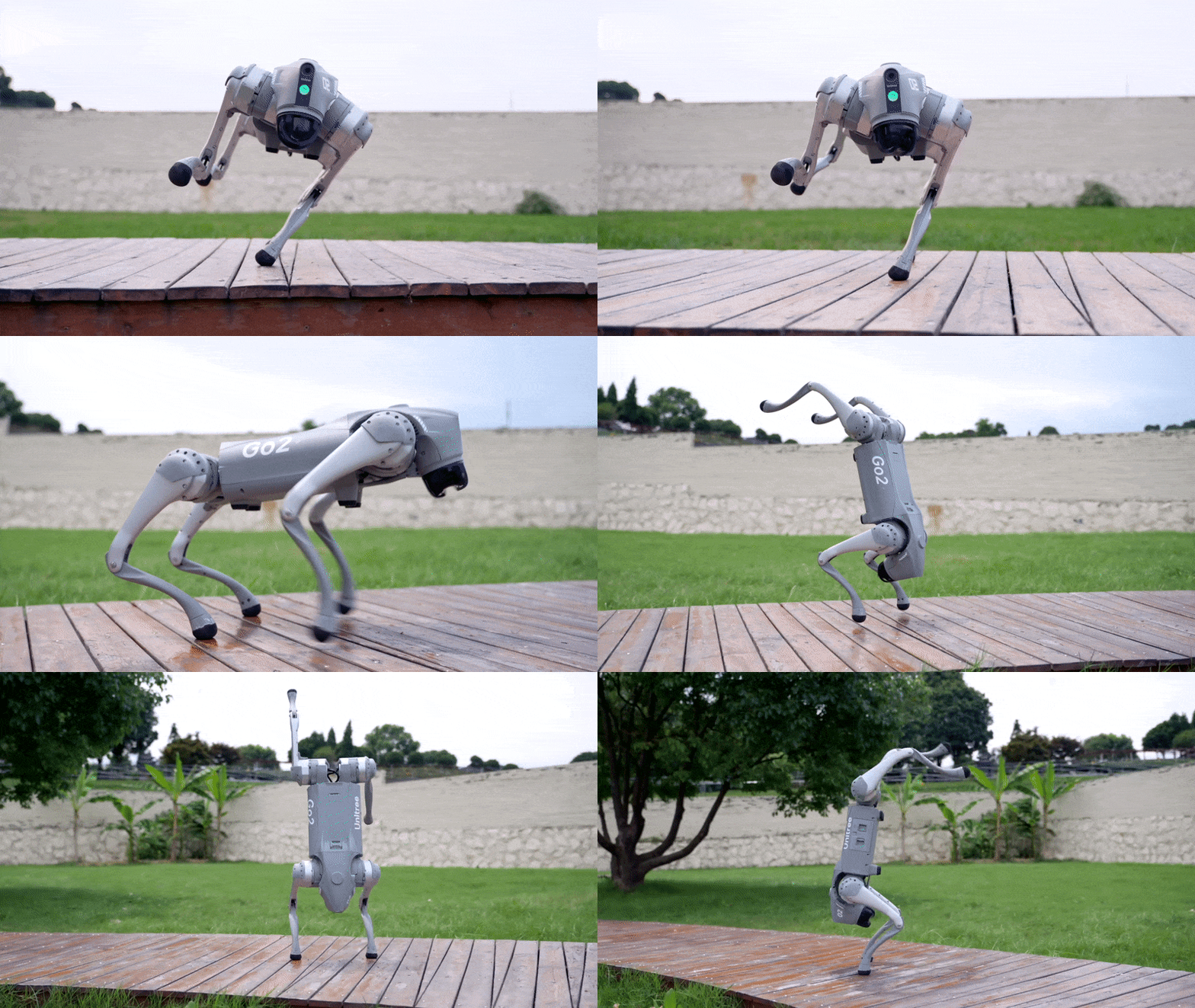
Boston Dynamics' Spot navigates construction sites, power plants, and tunnels — environments too hazardous for direct human entry. Its recent deployment for security at a private residence has further elevated its profile. China's Unitree Go2 clears obstacles, climbs stairs, and performs flips; it made its public debut at the 2023 Hangzhou Asian Games. Quadrupeds are expanding human reach into dangerous and inaccessible environments.
🔧 Modular Robots — Reconfigure for Any Task
MIT's self-assembling cube robots jump, rotate, and connect autonomously — shifting form as the task demands. More recently, magnetic modular robots combining liquid and solid properties have emerged, enabling even more fluid structural reconfiguration. The core advantage: one platform, many configurations.
🤝 Ultra-Compact Cobots — Table-Top Deployment
igus' ReBeL series — weighing as little as 4 kg — is small enough to mount on a workbench. SME manufacturers can deploy without dedicated floor space or safety fencing. Compactness is removing one of the last remaining barriers to cobot adoption.
🦿 Wearable Robots (Exoskeletons) — Motion Assistance on the Body
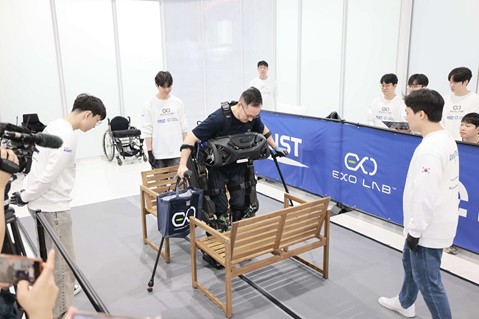
Harvard Biodesign Lab's soft exosuit uses flexible textile materials for rehabilitation support — conforming to the body without rigid structure. Korea's KAIST WalkON Suit enables patients with lower-limb paralysis to climb stairs. Industrial wearable suits for fatigue reduction and injury prevention in high-intensity workplaces are also approaching commercialization.
🚁 Hybrid Robots — Walk and Fly
Caltech's LEONARDO transitions between legged walking and winged flight. Ben-Gurion University's FSTAR flies and crawls — designed for military and search-and-rescue applications. Hybrid locomotion opens environments that neither ground robots nor drones can access alone.
🏗️ What Structural Innovation Means for the Industry
- Lower deployment barriers — table-top cobots and modular systems eliminate the space and fencing requirements that previously excluded smaller facilities
- New industry entry — construction, agriculture, healthcare, and logistics are all becoming accessible to robot deployment as structural flexibility expands
- Natural human-robot collaboration — wearables and cobots make shared workspaces the norm, not the exception, reducing worker fatigue
- Expanded SI opportunity — modular and hybrid structures create demand for customized system design, growing the role of robot system integrators (SIs)
The next competitive axis in robotics is not raw performance — it's structural adaptability: how flexibly, intelligently, and appropriately a robot can be configured for its environment. Robot manufacturers, SIs, and end users who track and respond to this structural evolution will have a significant advantage.
And across every form factor, the most important factor remains the same: safety.
For safe and productive robot deployment, contact Safetics.

로봇 사용에 안전과 생산성을 모두 잡을 수 있도록,
세이프틱스가 도와드릴게요.
안전한 로봇 사용에 궁금한 점이 있다면 편하게 세이프틱스에게 물어봐 주세요! :)