A robot isn't a single machine — it's a system of interdependent components working in concert. As the robotics market grows, understanding what's inside the machine matters more than ever. Here's what robot developers, system integrators (SIs), and end-user companies need to know.
🏗️The Four Subsystems
Every robot depends on four functional subsystems:
- Actuation — the physical drive system (motors, actuators)
- Control — the computational brain directing movement and response
- Sensing — the perceptual layer detecting the environment
- Communication — the network connecting the robot to external systems and data
Remove any one of these and smooth operation becomes impossible.
🔎 Five Key Components

💪 Motor — The Muscle
Motors generate all physical movement: driving wheels, moving manipulator joints, rotating the torso. Boston Dynamics' Spot uses high-performance motors to achieve stable quadruped locomotion and dynamic obstacle avoidance.
![포커스] 유니버설 로봇, 협동로봇 시장의 확대 겨냥한 신제품 및 전략 소개 - 캐드앤그래픽스](https://www.cadgraphics.co.kr/UPLOAD/editor/2022/12/29//202212325014r6vhmsUf6s_editor_image.png)
🧠 Controller — The Brain
The controller determines how fast, in which direction, and with what force each motor moves. In cobots, high-precision control is essential — Universal Robots' cobots use ultra-precise control technology to enable fine-tolerance operations including electronic component assembly, precision part handling, and quality inspection.
👀Sensor — The Senses
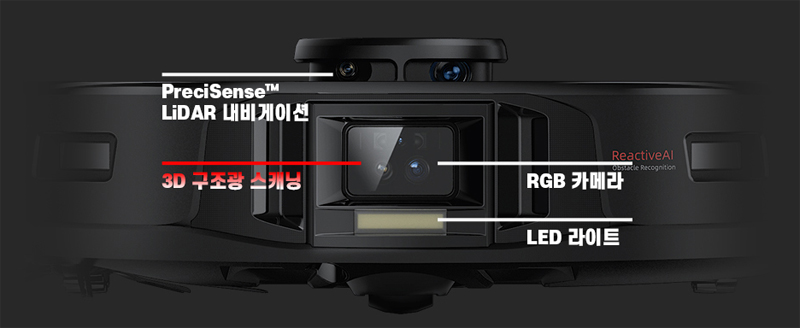
Sensors receive real-time environmental data: temperature, distance, impact, pressure, and visual information. LiDAR is the defining example — used in robotic vacuum cleaners (Roborock) to map 360° environments and calculate optimal cleaning paths, and in mobile robots and AMRs for navigation and obstacle avoidance.
🦴Frame — The Skeleton
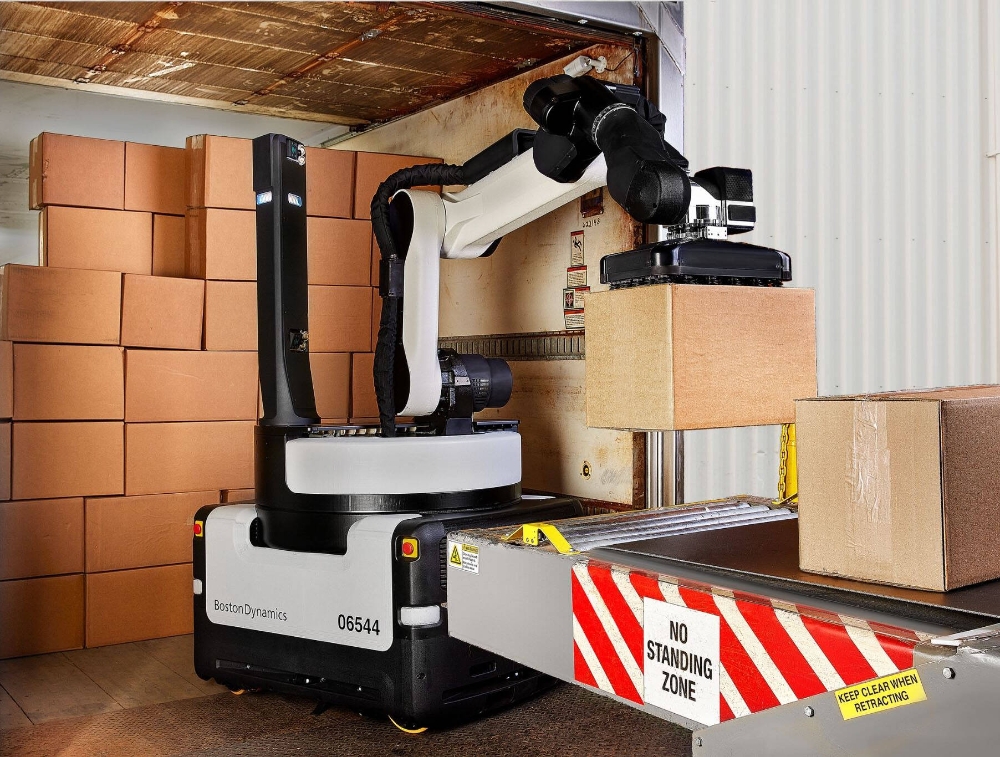
The frame supports all components and protects against external impact. The current trend: ultra-lightweight materials that maintain structural strength. Boston Dynamics' Stretch robot uses aluminum alloy framing — high durability for heavy-load box handling, low weight for efficient movement.

🫀Power Supply — The Heart
No energy, no operation. Batteries and external power systems are foundational. High-efficiency batteries are particularly performance-critical for drones and mobile robots — DJI drones use high-capacity lithium polymer batteries to achieve extended flight time.
🚀2025 Component Trends
Trend | Detail |
|---|---|
Ultra-compact high-power motors | Miniaturization for nano-robot and small-form-factor applications |
AI-based smart sensors | Sensors that analyze context autonomously, not just detect |
Ultra-lightweight frame materials | Carbon fiber and composite materials replacing metals |
Enhanced wireless communication | 5G and WiFi 6 enabling real-time control |
High-efficiency batteries | Longer operational life with lower energy consumption |
✅ Smart Component Selection: Three Principles
- Match to application — industrial and service robots have fundamentally different component requirements; start from use case, not spec sheet
- ROI over price — expensive components don't automatically deliver better returns; evaluate total cost against productivity gain
- Maintainability — ease of part replacement and service access is a critical operational consideration, especially for industrial cobots where downtime is costly
For industrial robots including cobots, component reliability is the primary selection criterion — not performance peaks.
For safe and productive robot deployment, contact Safetics.

로봇사용에 안전과 생산성을 모두 잡을 수 있도록,
세이프틱스가 도와드릴게요.