Where conventional industrial robots required physical separation from people, collaborative robots (cobots) are designed to work safely alongside them — flexibly, in shared spaces. That fundamental difference is driving rapid adoption across manufacturing and service environments.
What Is a Cobot, Exactly?🤔
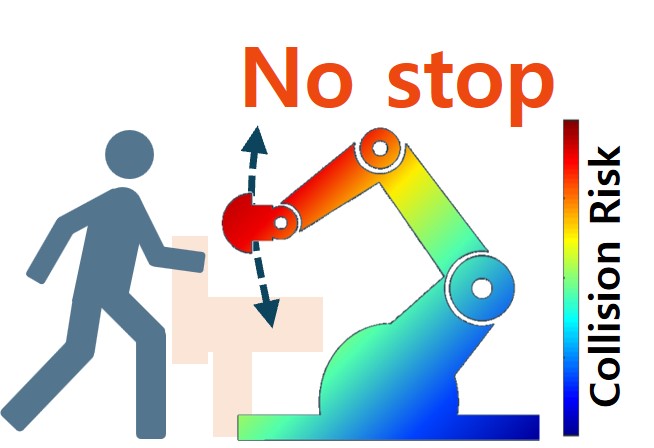
Cobots aren't a formally separate robot category — they're industrial robots certified for collaborative operation with humans. Compared to conventional industrial robots, they are smaller, lighter, and designed with rounded profiles to minimize injury risk on contact. This enables shared workspace operation that fixed-fence robots cannot support, significantly improving work efficiency.

One important clarification: "collaborative robot" does not mean inherently safe without safeguards. Operating without fencing or sensors requires collision safety analysis and Power and Force Limiting (PFL) mode certification. Safetics' SafetyDesigner supports this process — simulating human-robot collision probability and validating safe PFL mode operation before deployment.
What Cobots Do in the Field🔧
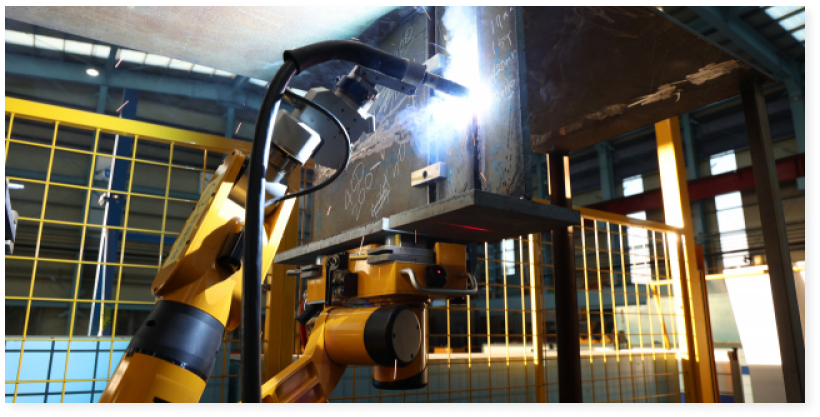
Cobots are active across precision assembly, packaging, inspection, and increasingly, welding — a skilled-trade application where cobots deliver consistent weld quality and protect workers from hazardous conditions simultaneously.
Three Industry Cases🌟
- Hyundai Motor — cobots deployed in automotive component welding: worker safety maintained, quality consistency improved
- Volkswagen — cobots applied to precision welding operations, significantly reducing error rates
- Samsung Electronics — cobots integrated into smartphone assembly lines for complex, fine-tolerance tasks, increasing production speed
School cafeterias are also deploying cobots for soup cooking and frying — a practical example of cobot adoption extending well beyond traditional manufacturing.

The Business Case💡
- Repetitive and hazardous tasks transfer to cobots; skilled workers redirect to creative and complex work
- Production quality stabilizes; defect rates decrease
- Worker fatigue and safety incident risk decline
For robot manufacturers and system integrators (SIs), cobot adoption is creating new business opportunities. Universal Robots has grown rapidly by delivering customized cobot solutions; SIs are building differentiated offerings around customer-specific cobot integration.
Cobots are making industrial environments safer and more efficient — and their application scope continues to expand. The trajectory is clear: where humans and machines work best together, cobots will be there.
For safe and productive robot deployment, contact Safetics.