COVID-19 paralyzed society for nearly three years — but paradoxically accelerated the robotics industry. The pandemic normalized robots psychologically: "robots are safer than people" became a widely held intuition, driving adoption across environments that had previously resisted automation. That surge in deployment generated new ideas and technologies at a rapid pace.
Germany moved first to establish safety standards for robots operating outside fences — opening the door to robot deployment beyond the factory floor. Mobile manipulators capable of moving while working, and AI-powered robots with genuine situational intelligence, followed in sequence. When Elon Musk declared "after EVs, humanoids" — it wasn't just a statement. It became the signal that triggered global corporations to enter the robotics market in force.
The Remaining Problem: Safety
No matter how capable robots become, misuse creates serious risk. Robots are tools — the systems and environments in which they operate matter more than the robots themselves.
Operating a robot beside a person without safety fencing requires technology that actively reduces collision risk. Germany led research into defining the safety thresholds for human-robot contact. In Korea, a Kyung Hee University research team conducted human-robot collision pain experiments to establish domestic safety standards. These efforts represent the ongoing work required to make human-robot coexistence genuinely safe — not just technically possible.
Preparing for a Future with Robots
The central challenge of human-robot coexistence is balancing performance and safety. High productivity without safety is not a viable outcome. Systematic robot safety research is a prerequisite — not an optional add-on — for the coexistence era.
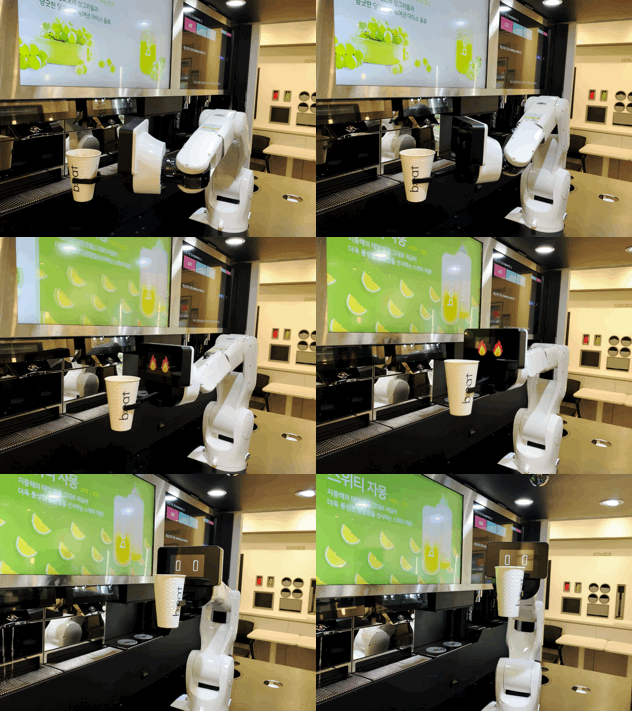
This is exactly why Safetics focuses deeply on robot safety: the technology is advancing fast, but the safety frameworks that make it deployable must advance with it. Robots are leaving the factory and entering daily life. The question is not whether people will work alongside robots — it is whether the safety systems will be ready when they do.
For safe and productive robot deployment, contact Safetics.